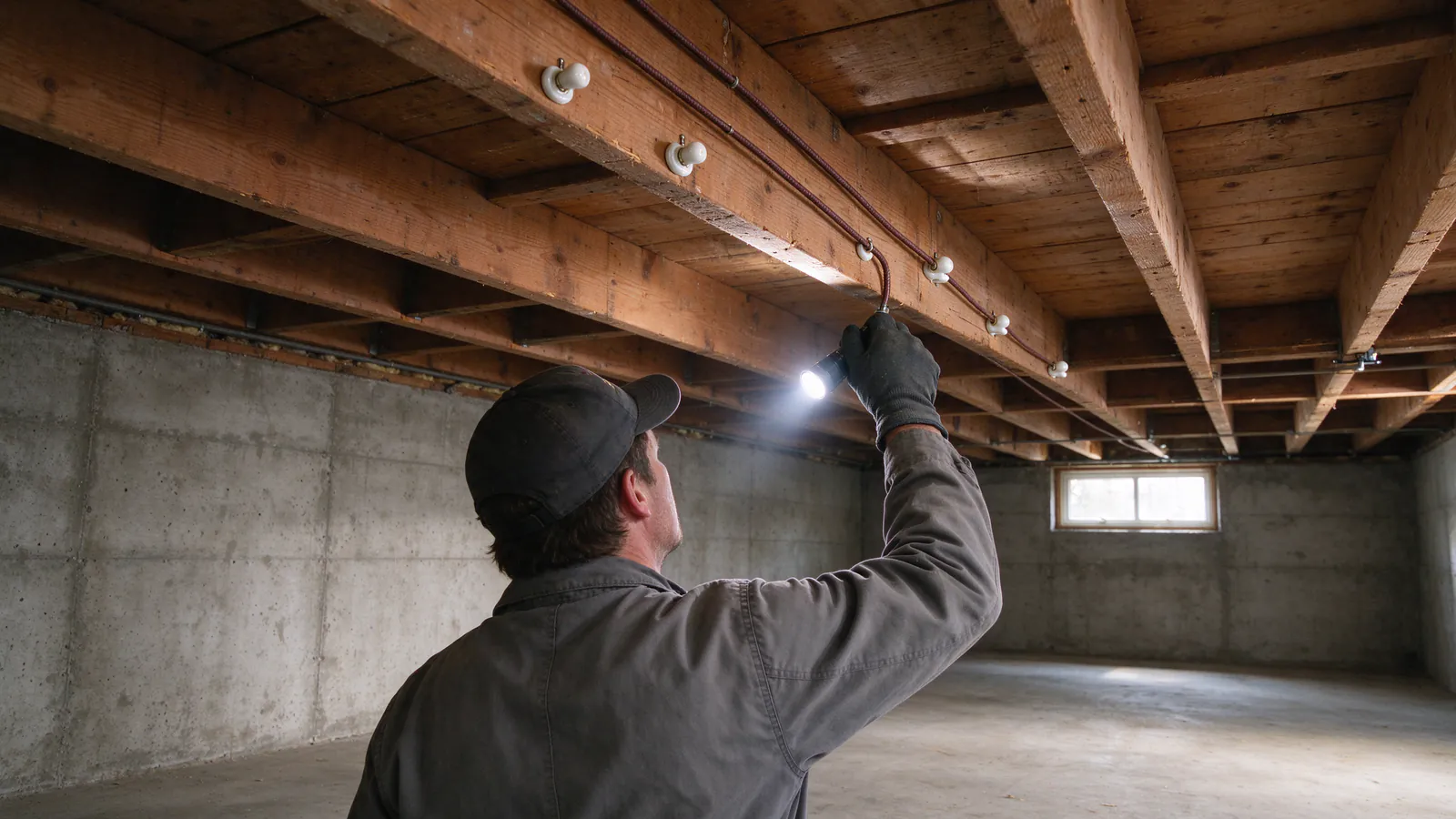
Yes. Testing, replacing, disconnecting and certifying knob and tube are ordinary electrical work. What some will not do is extend it, add new outlets to an old circuit or take on a small job in a knob and tube house without dealing with the old wiring. The friction homeowners report is less about refusal than about availability, scope and comparable bids.
Fog City SF Knob and Tube manages knob and tube replacement in San Francisco and the East Bay: the company takes the job from the first walk-through to the final inspection, and the electrical work is carried out by licensed and insured California C-10 electrical contractors. This guide explains what electricians typically take on and decline, why, and how to check that whoever you hire can legally do the work.
What electricians will and will not do
The answer depends on the job, not on the wiring.
| Job | Usually taken on? | Why |
|---|---|---|
| Testing and mapping circuits | Yes | It is the first step for any decision about old wiring; the knob and tube inspection covers it |
| Whole-house replacement | Yes | Ordinary rewiring work, though plaster access shapes who bids |
| Replacing remaining circuits | Yes | A defined scope with a clear end point |
| Disconnecting abandoned runs | Yes | Required for unused conductors, which must be removed or identified and terminated; see knob and tube removal |
| Certifying knob and tube for insulation | Yes, by a licensed electrical contractor | California’s insulation exception requires that survey and certification, as the attic insulation service explains |
| Certifying knob and tube as inactive for BayREN | Yes, by a licensed electrician | The rebate needs the certification and invoice |
| Repairing one damaged splice or device | Sometimes | Depends on condition; some prefer to replace the run |
| Extending or tapping a knob and tube circuit | Often declined | Splicing onto old conductors is where many problems start |
| A small new circuit in a knob and tube house | Sometimes declined | Homeowners report some firms only take larger projects |
Why extending old circuits is declined
The “no” that matters most is to adding onto an existing knob and tube circuit, and it is a sound one. Extending a circuit means splicing new conductors onto old ones whose rubber insulation may crack when moved, on a circuit that has no ground and may already be overloaded. The City of Alameda’s Building Official states plainly that knob and tube “cannot be extended,” while allowing existing wiring to be repaired or re-energized. The alternative is a new circuit from the panel, run in grounded cable, which is how new loads should arrive in an old house anyway. The repair or replace guide covers when a repair is still reasonable.
What homeowners report when hiring
Homeowners’ own accounts describe a handful of recurring frictions. They are reports, not measured rates, and willing contractors clearly exist: homeowners also describe completed whole-house rewires of knob and tube houses around the Bay Area.
- Small jobs turned away. Homeowners report that when they asked for one new circuit in a knob and tube house, most electricians they called said they only take large projects.
- Lead times. Homeowners report that electricians who do this work are busy and can take a while to respond, and some San Francisco owners facing an insurer’s deadline describe it as a shortage.
- Patching left out. Homeowners report quotes where one electrician would cut the openings but not restore lath and plaster, while another priced the repair as a separate line. The gap is the patching, not the electrical work.
- Being steered away from replacement. Some homeowners report electricians advising that undisturbed knob and tube in good condition did not need replacing, which can be a reasonable judgment for a few sound circuits and no insurer or sale pressing.
- Bids that do not match. Homeowners report wide spreads between bids for similar houses, including one priced per square foot without the bidder entering the attic, in a house that had already been partly rewired.
- Permit worries. Some owners report delaying a rewire because they fear an inspector will raise unrelated unpermitted work.
Most of these come back to scope. An electrician who does not want to restore plaster, or to take on a job that will grow once the walls are open, may decline or price defensively. A written scope that lists each circuit and opening, and says who closes each one, gives every bidder the same job to price. The rewiring quote checklist lists the lines to ask for, and the plaster-wall rewiring service explains how openings are planned in older walls.
Struggling to get knob and tube work quoted?
A walk-through tests every circuit, and the written scope lists each opening and who closes it, with plaster patching as its own line.
Who can legally do the work in San Francisco
The state license
In California, contractor licensing is handled by the Contractors State License Board. The C-10 electrical contractor classification covers placing, installing and connecting electrical wires and equipment. DBI lists the classifications it accepts for electrical permits: B, C-7, C-10, C-45, C-46, C-61 or D-34, with C-10 covering any electrical work and a B general contractor accepted only after approval based on the scope.
Certification for the people doing the work
Under California Labor Code section 108, people performing work as electricians for a C-10 contractor must be certified by the Division of Labor Standards Enforcement. A sole-owner C-10 licensee working alone does not need separate certification, and electricians coming from out of state must certify before working in California, with no grace period.
San Francisco registration
San Francisco adds city-side steps for the firm rather than a separate city license. To file no-plan electrical permits online, a contractor registers with DBI, authorizes its CSLB license on PermitSF and supplies a valid San Francisco Business Registration Certificate and proof of workers’ compensation. The San Francisco Electrical Code issues permits to licensed contractors registered with DBI’s Central Permit Bureau, or to a qualifying homeowner. In Oakland, permits go to a California-licensed contractor with an appropriate classification and a current Oakland Business Tax Certificate, or to the owner.
The homeowner route
San Francisco limits the homeowner electrical permit to owners of stand-alone single-family homes that are their primary residence, who must do the work themselves; LLCs are not eligible, and the Permit Center may tell an owner to hire a licensed contractor. Owners of flats, condos and TIC units cannot use it. The can I replace knob and tube myself guide covers that route honestly, and the San Francisco electrical permit guide covers the permit and inspections for everyone else.
How to check a contractor before you hire
- Look up the license. Use the CSLB license lookup with the license number on the quote. Confirm it is active and carries the classification that fits the work.
- Check workers’ compensation, bond and insurance. The CSLB license record lists the contractor’s bond and its workers’ compensation policy with effective and expiration dates, and shows a suspension if coverage lapsed. CSLB notes its database can lag, so ask for current certificates, including general liability, as well.
- Ask who does the wiring. If employees do the work, they should hold state electrician certification.
- Confirm the permit. Ask which DBI permits the quote includes and who will pull them. Work without a permit costs nine times the issuance fee plus the original fee in an investigation charge, and concealed work can be ordered opened.
- Ask about the test. A contractor who quotes after testing circuits and looking in the attic and basement is pricing your house rather than an average.
- Read the patching line. Ask who closes each opening and to what finish.
How the work is arranged here
Fog City SF Knob and Tube manages each job and the electrical work is carried out by licensed and insured C-10 electrical contractors. Every circuit is tested at the walk-through, the written scope and price lists each opening and who closes it, plaster patching is included as an itemized line, and the job ends with a written circuit record and a labeled panel directory. For BayREN’s knob and tube rebate, the contractors supply the licensed electrician’s invoice or inactivity certification the program needs, and the company helps with the rebate paperwork; the BayREN rebate guide covers the conditions, and approval rests with BayREN.
If you are looking for someone to take on your house, call (628) 296-7628 or request an estimate with the age of the house, the number of units and what prompted the question. The cost guide gives typical ranges in the meantime.