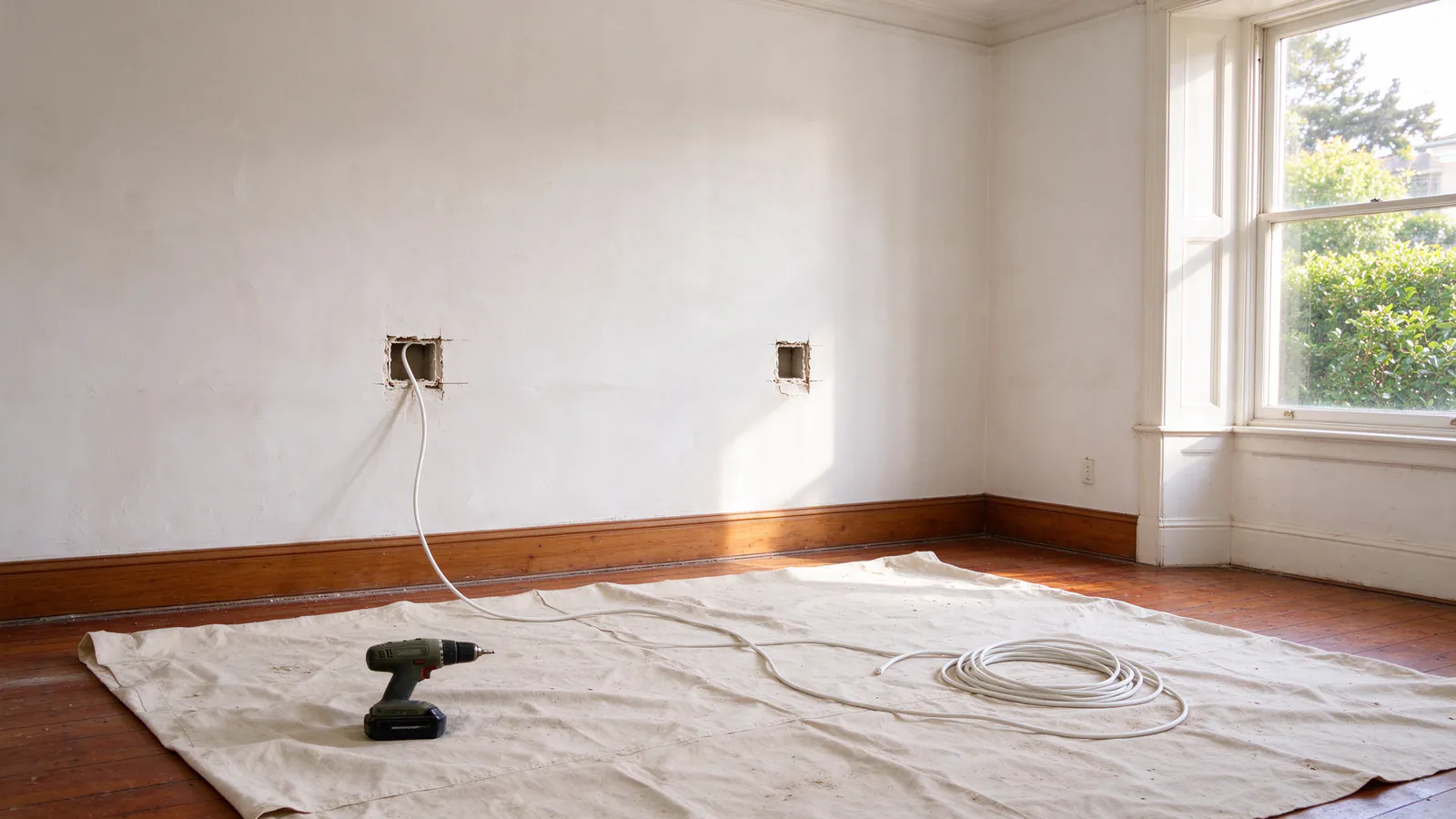
A rewiring quote you can rely on names the circuits it replaces and adds, the openings it expects and who closes them, the patching and paint scope, the permits and inspections it includes, any panel or service work, the code-required protection, how the old wiring is retired, and exactly what knob and tube, if any, will remain. A total without those lines cannot be compared.
Fog City SF Knob and Tube manages knob and tube replacement and whole-house rewiring in San Francisco and the East Bay, with the electrical work carried out by licensed and insured C-10 electrical contractors. The checklist below is meant to be useful with any contractor’s quote, including ours. Where this company’s own practice is relevant, it says so.
Why quotes for the same house differ
Homeowners report wide spreads between bids for similar houses, and the gap usually sits in what each bid covers rather than in the price of the same work. One bidder enters the attic and basement and tests circuits; another prices by floor area from the living room. One includes plaster patching; another leaves the openings for the owner. One includes the panel; another assumes the existing one will do. The cost guide gives typical ranges, and the checklist below is how to tell whether two quotes describe the same job.
The checklist
| Line | What to look for | Why it matters |
|---|---|---|
| Basis of the quote | Whether every circuit was tested and the attic, basement and garage were examined | A quote priced without testing is a guess about how much is still live |
| Circuits replaced | Each existing circuit listed, with what it serves | Shows the scope covers what is actually on knob and tube |
| Circuits added | Kitchen, bathroom, laundry, appliance and other new circuits, by name | New circuits are a large share of the cost and the benefit |
| Other old wiring | Whether cloth-insulated and later ungrounded cable spliced into the knob and tube is included | A “knob and tube only” quote can leave old ungrounded wiring live |
| Devices | Receptacles, switches and fixtures to be replaced or reconnected | Prevents disputes over which fixtures go back up |
| Code protection | Arc-fault protection where CEC 210.12 requires it, ground-fault protection where CEC 210.8 lists, tamper-resistant receptacles under CEC 406.12, a ground on every new circuit | Confirms the new work is priced to current code |
| Panel and service | Whether the existing panel is reused, replaced or supplemented, and whether the service changes | Panel work is a separate scope that a total can hide |
| Utility side | Who coordinates with PG&E and that PG&E’s own charges are separate | PG&E sets its charges case by case |
| Permits | Which DBI permits, how many and in which fee category | Non-R-3 buildings need a permit per dwelling unit |
| Inspections | Pre-cover and final inspection, and the Green Tag | Openings cannot close before the pre-cover inspection |
| Openings | The number and location of wall and ceiling openings expected | This is the line that most affects your house and the patching |
| Patching | Who closes each opening and to what finish | Some quotes include it, some leave it to the owner |
| Paint | Whether touch-up or full-wall paint is in or out | Paint is often separate from patching |
| Lead-safe practice | Containment and cleanup for openings in pre-1979 paint | DBI presumes those buildings contain lead paint |
| Retiring old wiring | Old runs disconnected at both ends, removed where reachable, otherwise identified and terminated | Dead runs left connected or unmarked confuse later inspections |
| What remains | A written statement of any knob and tube still live after the work | Insurers and buyers will ask |
| Records | A circuit record and a labeled panel directory | The proof of what was done |
| Schedule and power | Sequence of rooms and days the main power is off | Matters most in occupied homes and multi-unit buildings |
| Exclusions and changes | What is not included and how hidden conditions are priced | Old houses hide things; the change process should be clear |
The lines that matter most
The basis of the quote
The first question to ask of any quote is what it was built on. Homeowners report bids priced per square foot without the bidder entering the attic, in houses where part of the wiring had already been replaced. A quote built on a circuit-by-circuit test is narrower and easier to check, because each line ties to something that was found. On a Fog City SF Knob and Tube walk-through, every circuit is tested before scope or price is discussed, and the knob and tube inspection describes what that covers.
Openings and who closes them
This is a line homeowners report finding missing. Homeowners report quotes where one electrician would leave the openings for someone else and another priced plaster repair separately, which makes the totals impossible to compare. A useful quote lists the expected openings by room, says who closes each one and to what finish: closed and ready for paint, textured to match, or painted. Fog City SF Knob and Tube’s written scope and price lists each opening and who closes it, and plaster patching is included as its own itemized line; paint is not promised. Whatever the contractor, the do electricians patch walls guide and the plaster-wall rewiring service explain what restoration involves.
Panel and service
A new panel does not remove knob and tube, and a rewire does not always need a new panel. A quote should say which it assumes and why, ideally from a load calculation. If a panel or service upgrade is included, it should be its own line, and PG&E’s charges should be noted as separate, since PG&E sets them case by case. The panel upgrade vs rewiring guide explains the difference and the electrical panel upgrade service covers that scope.
What remains
On a partial job, the quote should list every circuit that will stay on knob and tube. On a whole-house job, it should say none will remain live on the replaced circuits. Either way, the written record at the end should match. This is the line that prevents the common later discovery of one ceiling fixture still on an old run. The partial replacement service is built around that boundary.
Comparing rewiring quotes?
Every circuit is tested first, and the written scope lists each circuit, each opening, who closes it and the patching line.
Red flags
- No circuit test. A firm total with no mention of which circuits are live.
- New cable spliced onto old runs. Extending or tapping knob and tube to save routing; the mixed wiring guide explains why that causes trouble.
- No permit. Work in San Francisco needs a DBI electrical permit before new wiring goes in, and work done without one carries an investigation fee of nine times the issuance fee plus the original fee.
- “No walls will be opened.” Some houses need very few openings; no one can promise none before testing.
- Silence on patching. If the quote does not mention openings at all, assume you will be closing them.
- No license number. A California contractor’s license can be checked on the CSLB site; the will electricians work on knob and tube guide explains which classifications apply.
Comparing two quotes
Once both quotes cover the same lines, compare them line by line rather than by total. Put the circuit lists side by side and check that both replace the same circuits and add the same new ones. Do the same for openings, patching, panel and permits. Where one quote includes something the other leaves out, add an allowance to the cheaper one before comparing. The cost estimator gives a first figure to sanity-check both, and the replacement process guide shows where each line falls in the work.
If you have a quote in hand and want a second one built on a circuit test, call (628) 296-7628 or request an estimate with the age of the house and the number of units.