Fog City SF Knob and Tube manages partial knob and tube replacement in San Francisco and the East Bay: the circuits that still run on knob and tube are replaced from the panel out, while circuits already rewired by earlier work are left in place, and the boundary between the two is written down. Licensed and insured electrical contractors (California C-10) carry out the electrical work.
A partial rewire replaces some of a house’s branch circuits rather than all of them. It fits a familiar San Francisco history: a kitchen and bathroom remodeled decades ago, a new panel at some point, and a handful of bedroom, hall and ceiling-light circuits still on the original wiring. Of the DBI electrical permits filed from January 2016 to October 2026 whose descriptions name knob and tube, 156 also mention a remodel or renovation, which is how many houses ended up half old and half new.
What happens on the first visit
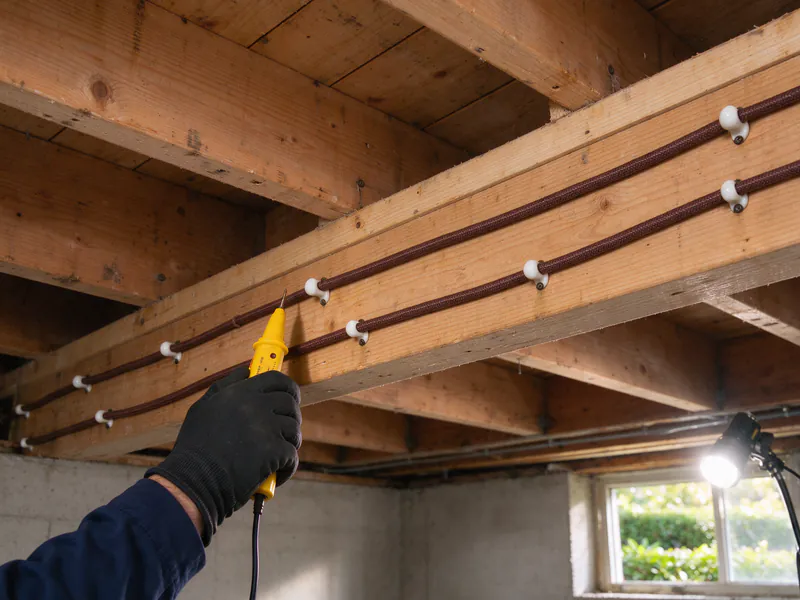
The first visit finds the boundary. Every circuit is tested and traced from the panel or fuse box, and each one is recorded as fully replaced, still on knob and tube, or mixed, meaning later cable joined to an old run somewhere along the way. Mixed circuits are the reason a partial job cannot be scoped by room. A remodeled bedroom with new outlets may still be fed through an original run in the ceiling, and a hall light on knob and tube may share a neutral with a later circuit.
The visit also checks how each remaining circuit can be reached from the attic, basement or garage, what finishes sit in the way, and whether the panel has space for the replacement circuits. The written scope then lists each circuit to be replaced, each circuit staying, each opening and who closes it.
Partial vs full rewire: which fits
A partial replacement is the better value when testing shows most circuits already on modern grounded cable and only a few still on knob and tube, with clean boundaries between them. A full rewire is usually better when most circuits are original, when several wiring eras are spliced together, or when the remaining knob and tube runs through rooms that will be opened anyway.
Cost is the deciding detail. A national budgeting range for partial work on several remaining circuits is $2,000 to $10,000; a typical San Francisco range for a whole-house knob and tube replacement in a single-family home is $20,000 to $50,000 or more. Those ranges look far apart, but phased work tends to close the gap. Each phase has its own setup, permit, openings and patching, and the access in a room is paid for twice when a later phase reopens it. If the plan is to replace everything eventually, doing it in three or four separate jobs can approach the cost of one whole-house rewiring.
Other factors push one way or the other. An attic about to be insulated, a sale, or an insurer asking about any knob and tube rather than active knob and tube all argue for finishing the job. A tight budget, an occupied rental, or remaining circuits that are sound, unburied and correctly protected can argue for a partial scope now, with the rest planned. The repair or replace guide explains when leaving a sound circuit alone is reasonable.
Replacing a circuit, not an outlet
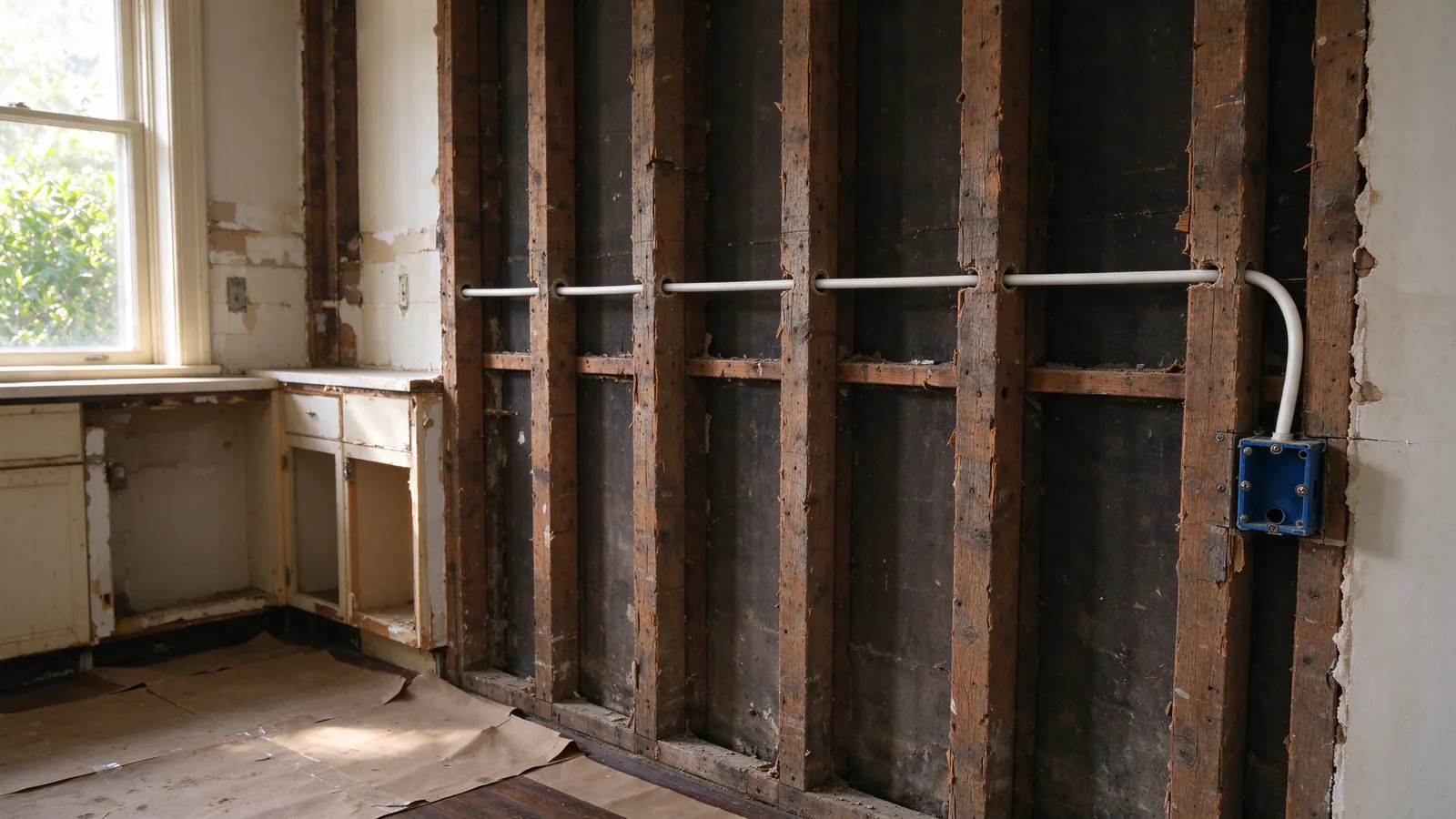
The unit of a partial replacement is the circuit. A new grounded cable runs from a breaker in the panel to every outlet, switch and light that circuit served, and the old run is disconnected at both ends. Swapping one outlet or one stretch of wire leaves the rest of the circuit on knob and tube, still protected by whatever fuse or breaker it had, and adds a joint between eras where none existed.
New circuits are built to current code. Replaced branch circuits in most living areas need arc-fault protection under California Electrical Code 210.12, with an exception only for short extensions of 6 feet or less that add no outlets. Kitchens, bathrooms, laundry areas and the other listed locations need ground-fault protection, and new receptacles must be tamper-resistant. Every new cable carries an equipment grounding conductor, which is what makes the new three-prong outlets grounded rather than three-prong in appearance; the grounding page covers houses where that is the main goal. The AFCI and GFCI guide explains what each device protects against.
Where old meets new: junction boxes and the boundary
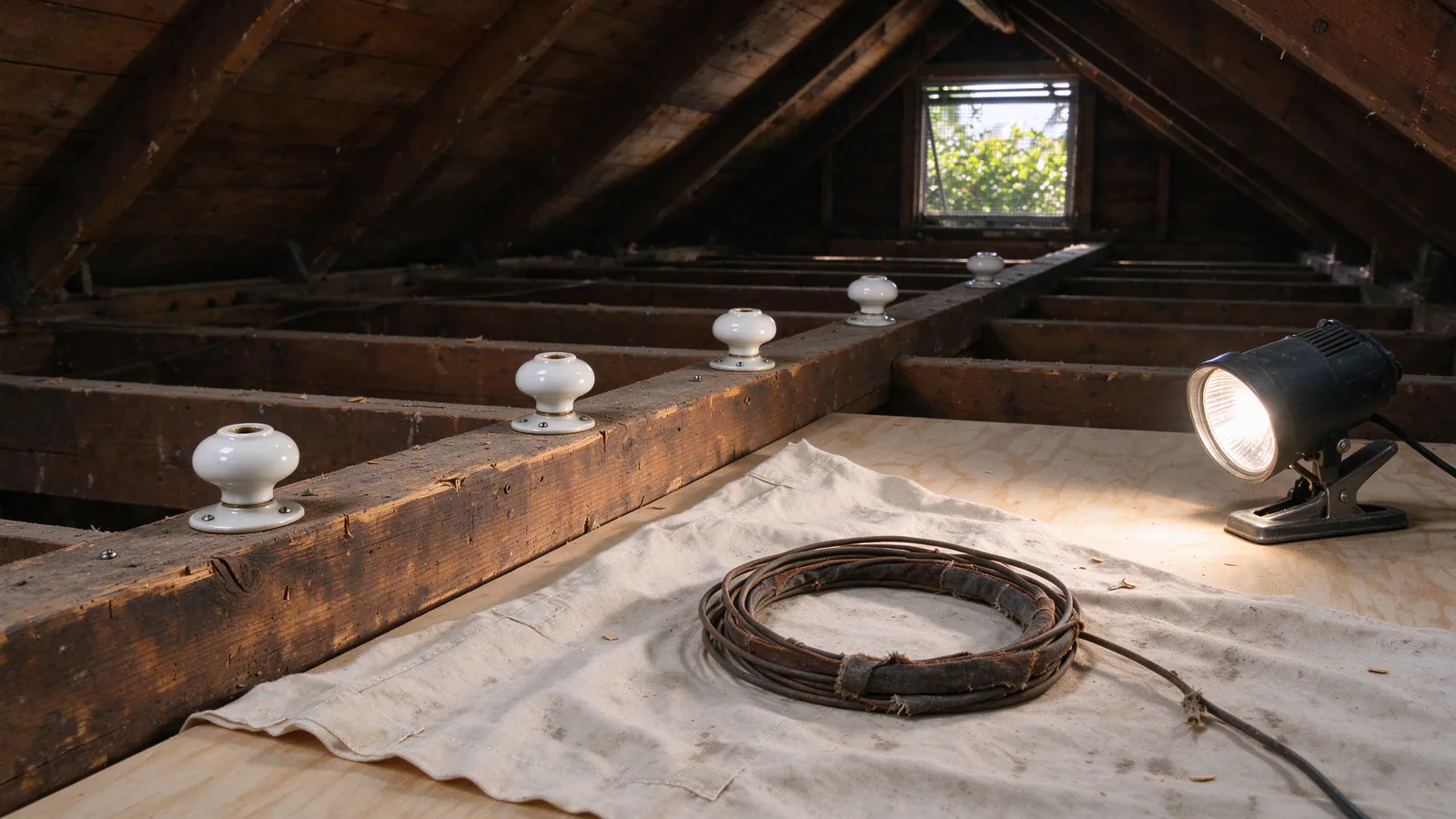
Every partial job has a boundary, and the boundary is where problems hide if it is drawn carelessly. Earlier work in some houses joined new cable to old runs inside ceilings and walls, sometimes with no box, sometimes in a box later buried under insulation. Those joints are hard to find and easy to forget.
A clean partial replacement puts the boundary at the panel wherever it can, by giving each replaced circuit its own breaker and its own cable from end to end. Where an old circuit has to stay connected to something, the connection sits in a junction box that can still be reached and is noted in the circuit record. A box that will end up behind closed plaster with no cover access is a sign the boundary is in the wrong place. The guide to knob and tube mixed with Romex describes the hidden-splice and shared-neutral patterns that testing looks for.
Where should the boundary fall in your house?
Testing names the circuits still on knob and tube and the joints where they meet newer wiring.
Writing down what stays
The circuit record is the part of a partial job owners most often wish they had. Homeowners report buying houses described as rewired and finding, years later, ceiling fixtures still fed by knob and tube that an earlier job left behind. The record prevents that by naming each replaced circuit, each circuit still on knob and tube and each dead run that was disconnected, and the labeled panel directory matches it.
That record also answers the insurer’s question. Some carriers ask only whether active knob and tube remains, others whether any is present, and a carrier may decide either way. A partial job that replaces every live circuit, with dead runs disconnected at both ends and listed, gives an underwriter facts instead of a guess; an electrical inspection for insurance writes those findings up in the carrier’s terms. Runs that are dead but still in the walls are handled by knob and tube removal.
Permits, phases and access
A partial replacement needs a DBI electrical permit, because replacing a circuit changes existing wiring and falls outside the exemption for like-for-like device swaps. Current DBI fees run $305 for up to 10 outlets and devices with one inspection, and $450 for 11 to 20 with two. The pre-cover inspection happens before any opening is closed; DBI can order concealed, uninspected work exposed at the owner’s expense, so patching waits for it. The San Francisco permit guide covers the steps.
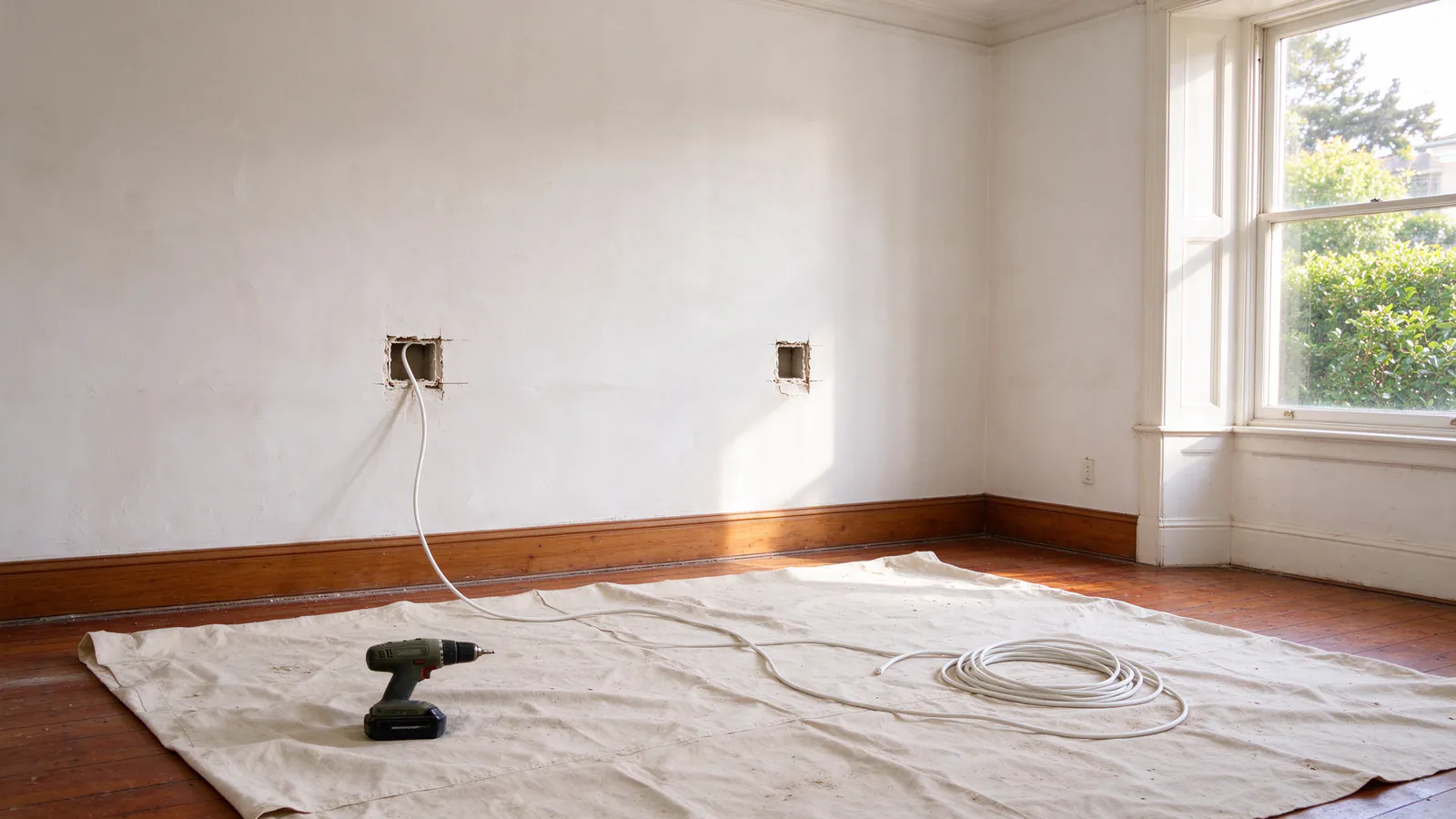
Phases work best when each one follows an access event that is happening anyway: a remodel opening a room, a ceiling coming down, an attic being cleared for insulation. The remodel replacement service plans circuits around open walls. In plaster rooms, openings are small and placed at boxes and cavity ends, and plaster-wall rewiring covers the method.
East Bay rules shape partial scopes too. The City of Alameda’s building official states that knob and tube cannot be extended but may be repaired or re-energized, so any added outlet in a knob and tube room becomes a new circuit, and new circuits may need arc-fault protection; the Alameda page has the details. Oakland requires an electrical permit for rewiring, while its exemption list covers replacing outlets without rewiring, as the Oakland page explains. The cost guide puts the partial and whole-house ranges side by side.