Fog City SF Knob and Tube manages grounding work for outlets in old houses across San Francisco and the East Bay: every outlet is tested, and ungrounded ones are given a real ground path, usually by replacing knob and tube circuits with new grounded cable, sometimes by adding a grounding conductor to later wiring that is sound. Licensed and insured electrical contractors (California C-10) carry out the electrical work.
The question tends to start with an annoyance rather than an alarm: a surge protector whose “grounded” light stays dark, a three-prong appliance plug that will not fit, or an inspection report that lists ungrounded outlets. Of the DBI electrical permits filed from January 2016 to October 2026 whose descriptions name knob and tube, 70 also mention grounding. Whether you can simply swap the outlets, and what the code allows when you do, is covered in the three-prong outlet guide. This page is about the work that gives an outlet a ground it did not have.
Why old outlets have no ground
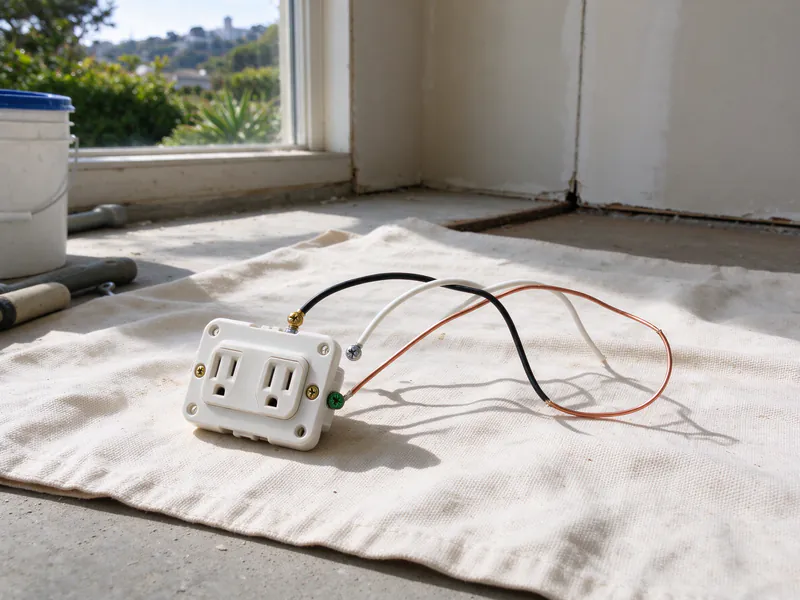
An equipment grounding conductor gives fault current a low-resistance path back to the panel, so that if a hot wire touches a metal appliance case, the breaker or fuse opens instead of the case staying energized. It is also what a surge protector uses to divert a spike, and what the round third prong on a plug connects to.
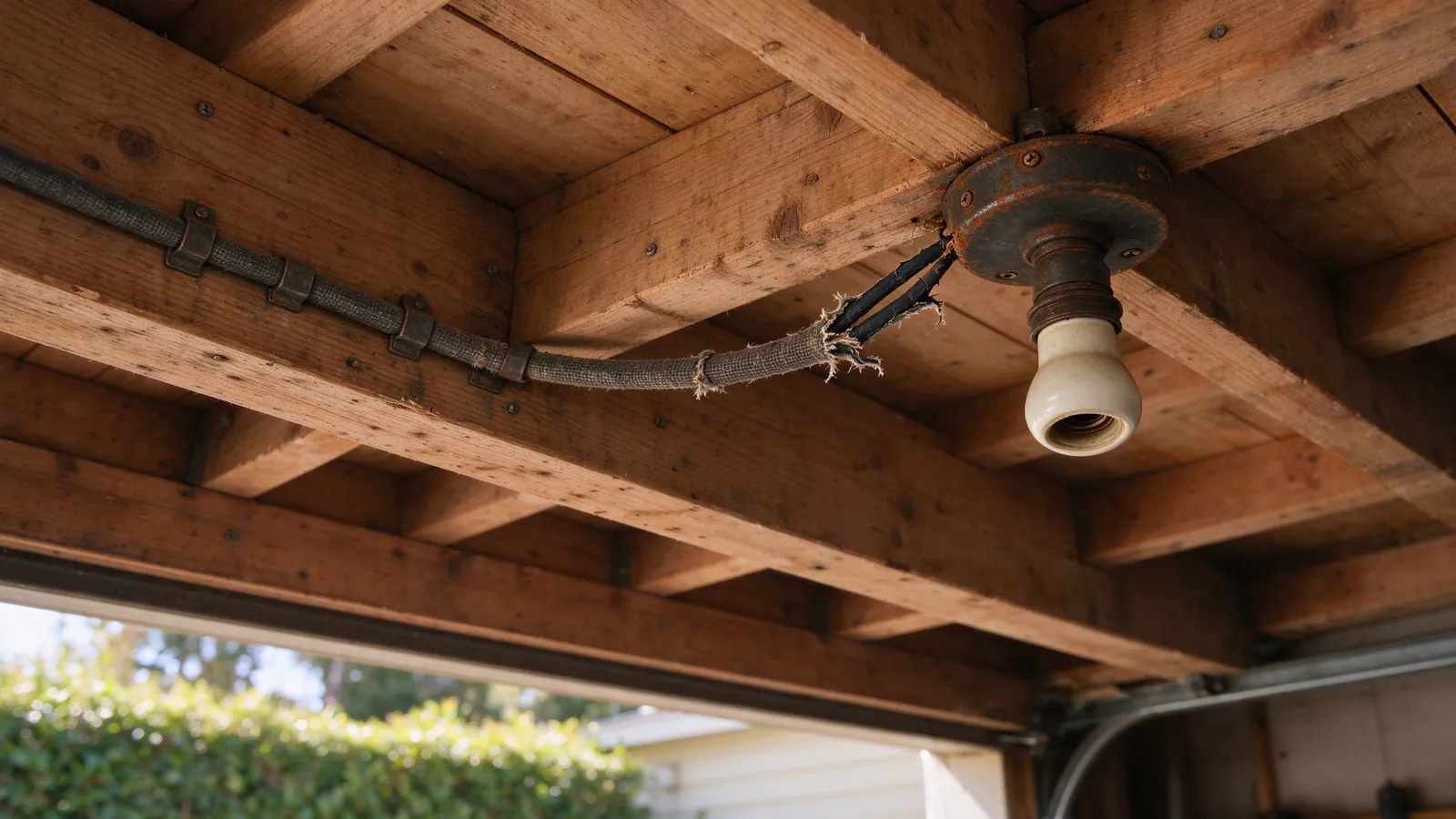
Knob and tube circuits have no such conductor. They were built as two separate wires, a hot and a neutral, before grounding became part of ordinary branch wiring. Much of the cloth-insulated cable installed in the decades afterwards had no ground wire either, so a house can be ungrounded on circuits that are not knob and tube at all. The knob and tube vs cloth wiring guide explains how to tell the two apart, and why it changes the grounding answer.
What happens on the first visit
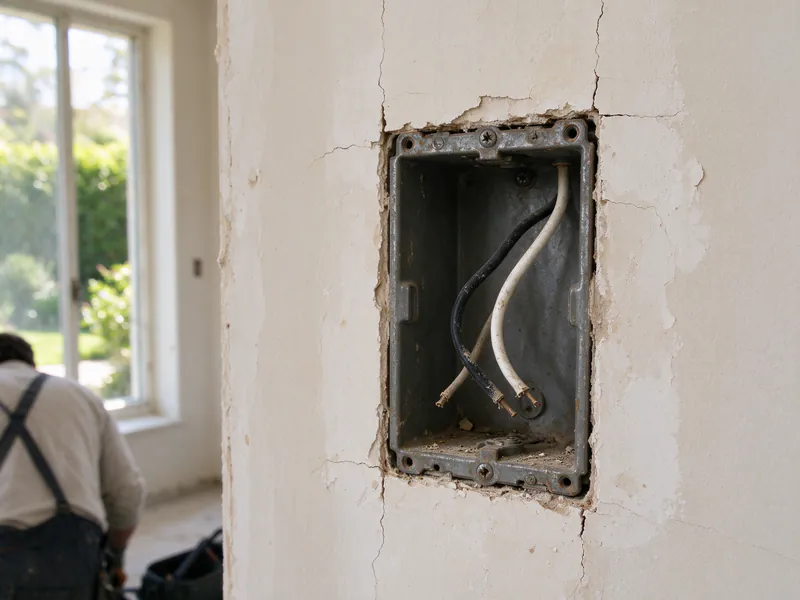
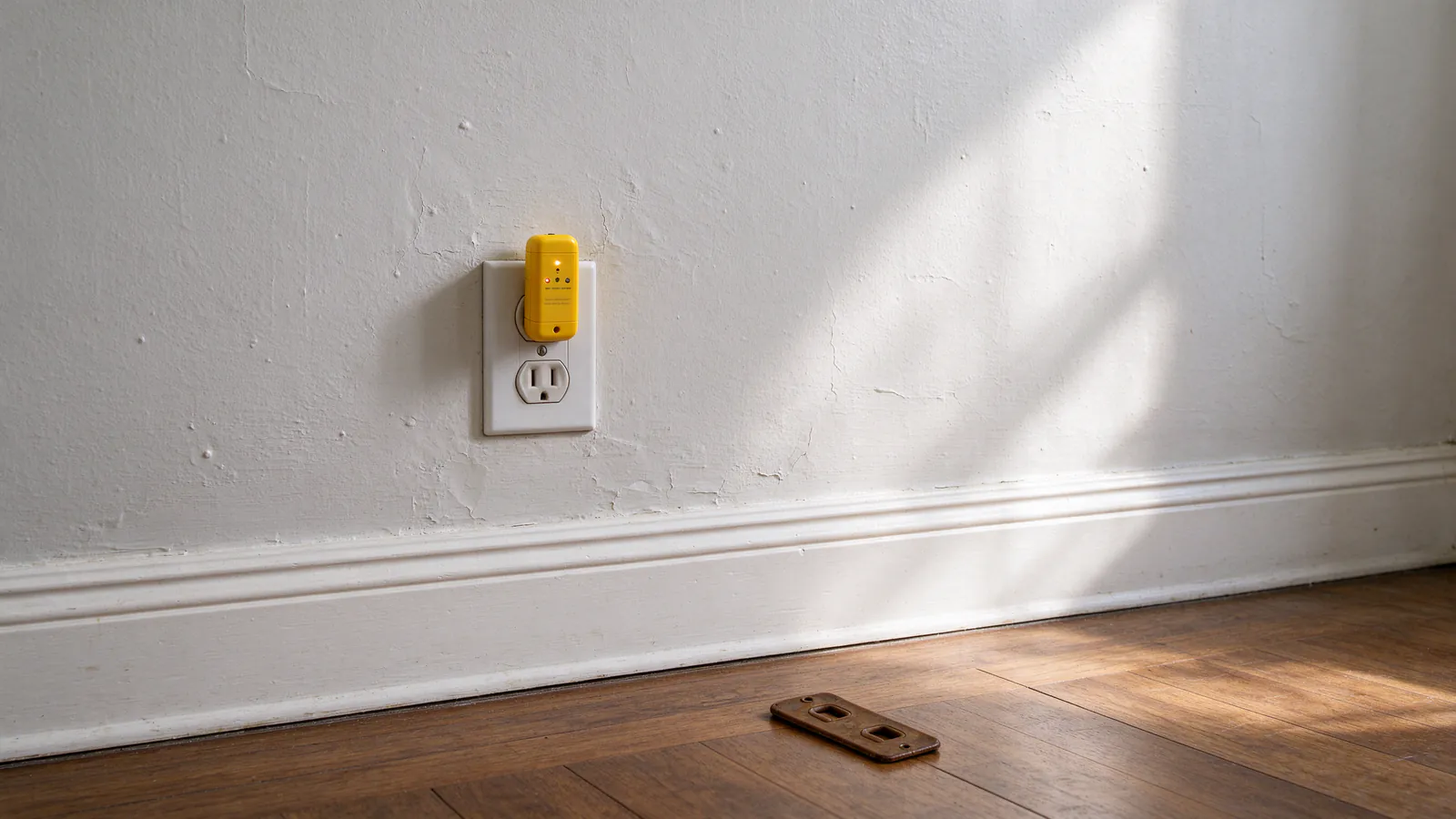
Every circuit and outlet is tested, as in any knob and tube inspection. The test sorts outlets into three groups: grounded, ungrounded, and those that only look grounded. The third group matters most. Homeowners report finding three-prong outlets with nothing connected to the ground screw, outlets where the ground terminal was jumpered to the neutral, a so-called bootleg ground that fools a plug-in tester, and ground-fault outlets that were never wired to protect anything.
The visit then records what each circuit runs on: knob and tube, ungrounded later cable, or grounded cable, and whether circuits are mixed. It checks the service grounding and bonding at the panel or meter, and notes how cable could reach each box from the attic, basement or garage. The written scope lists each circuit, the method chosen for it, each opening and who closes it.
A ground rod is not a grounded outlet
Owners are sometimes told the house is grounded because there is a ground rod or a clamp on a pipe outside. That is service grounding: the electrical service connected to the earth and its metal parts bonded together at the panel or meter. It matters, and it is checked, but it does not reach the outlets.
An outlet is grounded only when its own circuit carries an equipment grounding conductor back to the panel. On a two-wire circuit there is nothing connecting the outlet’s ground screw to that service grounding, however good it is. Fixing the service grounding fixes the service; grounding the outlets means work on the branch circuits.
Three ways to give an outlet a real ground
The first method, and the only one that retires the knob and tube, is a new grounded circuit. Cable with an equipment grounding conductor is run from a breaker in the panel to every outlet, switch and light the old circuit served, and the old run is disconnected at both ends. This is a partial replacement of that circuit, and it is built to current code: arc-fault protection on replaced circuits where CEC 210.12 requires it, ground-fault protection in the locations CEC 210.8 lists, and tamper-resistant receptacles under CEC 406.12.
The second is an added grounding conductor. Where a circuit runs on later two-wire cable whose insulation is sound and whose protection matches the wire, the code allows a separate grounding conductor to be added for its outlets in some cases. Whether that applies, and where the new conductor connects, is confirmed for the specific circuit before it goes in the scope. The circuit’s conductors stay; only the ground is new. It can cost less than a new circuit when the route is easy, but it keeps old cable in service, so the cable’s condition decides whether it is worth doing.
The third is not a ground at all. California Electrical Code 406.4(D) sets out what may be installed when a receptacle is replaced where no ground exists, and ground-fault protection is one of the options. A GFCI outlet installed that way is marked “No Equipment Ground”, and grounding-type outlets protected by it downstream are marked “GFCI Protected” and “No Equipment Ground”. A GFCI protects people from shock by tripping on leakage, but it gives a surge protector or a grounded appliance nothing to connect to. It is a reasonable answer for an outlet where running a ground is impractical, and a poor one for a home office. The AFCI and GFCI guide explains what each device does.
Not sure which outlets are really grounded?
A test of every outlet finds the open grounds, the bootleg grounds and the ones that are fine as they are.
Why knob and tube is replaced rather than grounded
Adding a ground wire to a knob and tube circuit is possible in principle, and it is rarely the right scope. The ground would sit beside conductors whose rubber and cloth insulation may have gone brittle near hot ceiling boxes, on a circuit that may be protected by a fuse larger than the wire can carry. The work to run that ground reaches every box on the circuit anyway. Most of the labor is in reaching those boxes, so running new grounded cable along the same route adds comparatively little, and it retires the knob and tube instead of keeping it in service with a ground attached.
The new cable also brings the circuit’s protection up to date at the same time, and it simplifies the paperwork. An insurer asking whether active knob and tube remains, the question an electrical inspection for insurance answers, gets a clear answer for a replaced circuit and an awkward one for a grounded knob and tube circuit. Where most of the house is still on the original wiring, grounding outlet by outlet becomes a slow version of whole-house rewiring, and planning it as one job is usually cheaper.
Which outlets to ground first
Priorities follow use. Kitchens, bathrooms and laundry areas come first, because appliances with grounded plugs sit there, water is close, and the code requires ground-fault protection in those locations for new work. A home office or media wall with computers and surge protectors is next. Outlets for a refrigerator, washer or anything with a metal case follow. Bedroom outlets for lamps and chargers can wait, and two-prong outlets there are not a defect in themselves; they are what the system was designed for.
Where some circuits are already on cloth-insulated cable rather than knob and tube, cloth wiring replacement covers whether to ground that cable or replace it.
Permits, openings and cost
Grounding work that changes wiring needs a DBI electrical permit. San Francisco’s permit exemption covers like-for-like device replacement only where no change in existing wiring is involved, and adding a grounding conductor or running new circuits is a change. DBI’s fee follows the count of outlets and devices: $305 for up to 10 with one inspection, $450 for 11 to 20 with two, and $580 for up to 40 with three. The pre-cover inspection happens before openings close, as the San Francisco permit guide explains.
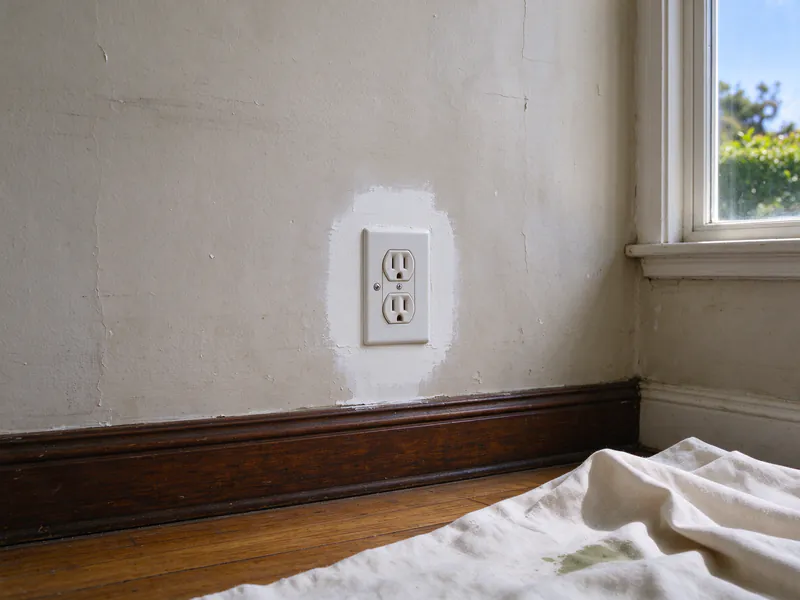
Openings are kept small and placed at outlet boxes and the tops and bottoms of wall cavities, with patching listed on its own line; plaster-wall rewiring covers the method. No published local price exists for grounding outlets, so the cost rests on the number of circuits, what they run on, how cable reaches each box, the finishes in the way and whether the panel has space for new circuits. The cost estimator gives a first number for circuit replacement, and the guide to what replaced knob and tube explains the cable the new circuits use.