Before anyone prices a rewire, it helps to know which wiring is still live. Fog City SF Knob and Tube arranges knob and tube inspections in San Francisco and the East Bay: every circuit in the house is traced and tested so you know which wiring is still live on knob and tube, which is dead, and which has been joined to later cable. Licensed and insured electrical contractors (California C-10) carry out the testing and write the findings.
An inspection comes before any decision about scope. A San Francisco house with knob and tube may have had work done since it was wired: a kitchen remodel, a new panel, an outlet added for a bathroom heater. Each change may have retired some original runs and left others in service. The point of the visit is to replace guesses about age with a map of what each circuit actually runs on. It is an electrical inspection by an electrical contractor, not a general home inspection and not an engineering report, and it does not decide whether an insurer will write a policy. When a carrier is the one asking, the electrical inspection for insurance turns the same testing into the written account an underwriter needs.
What happens on the first visit
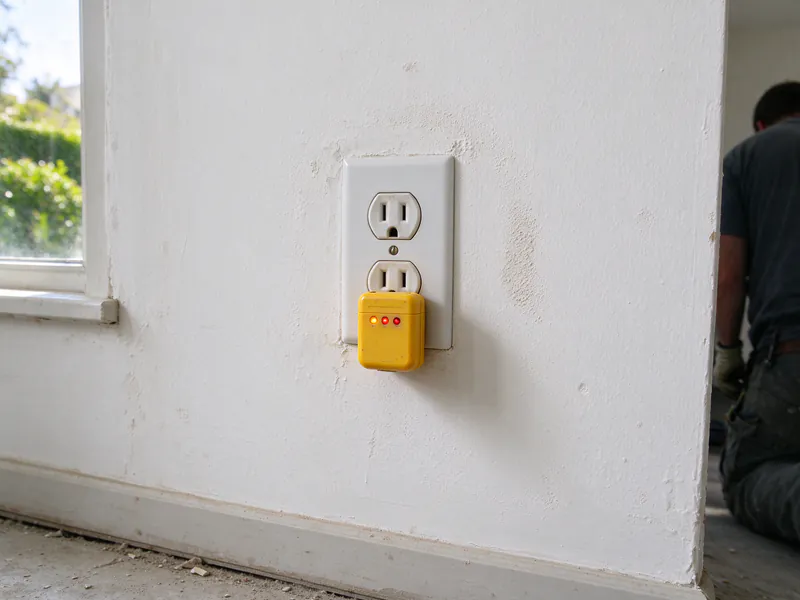
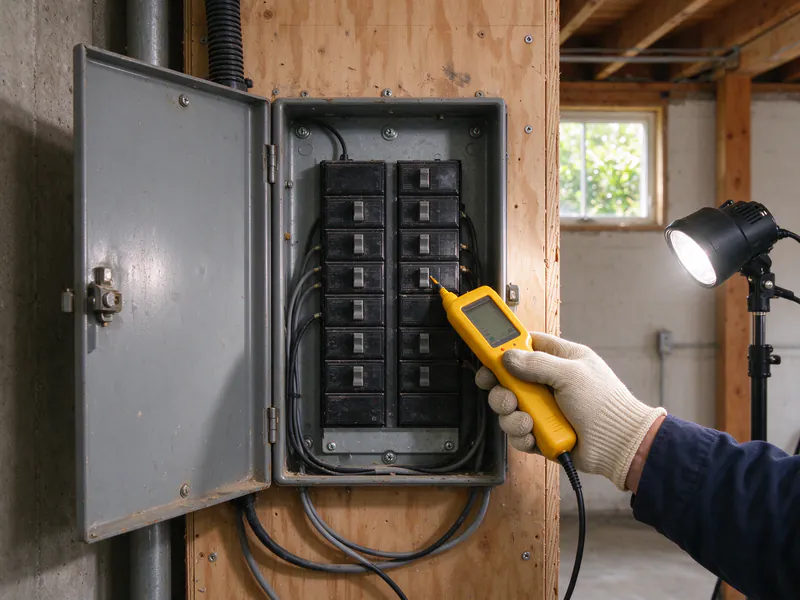
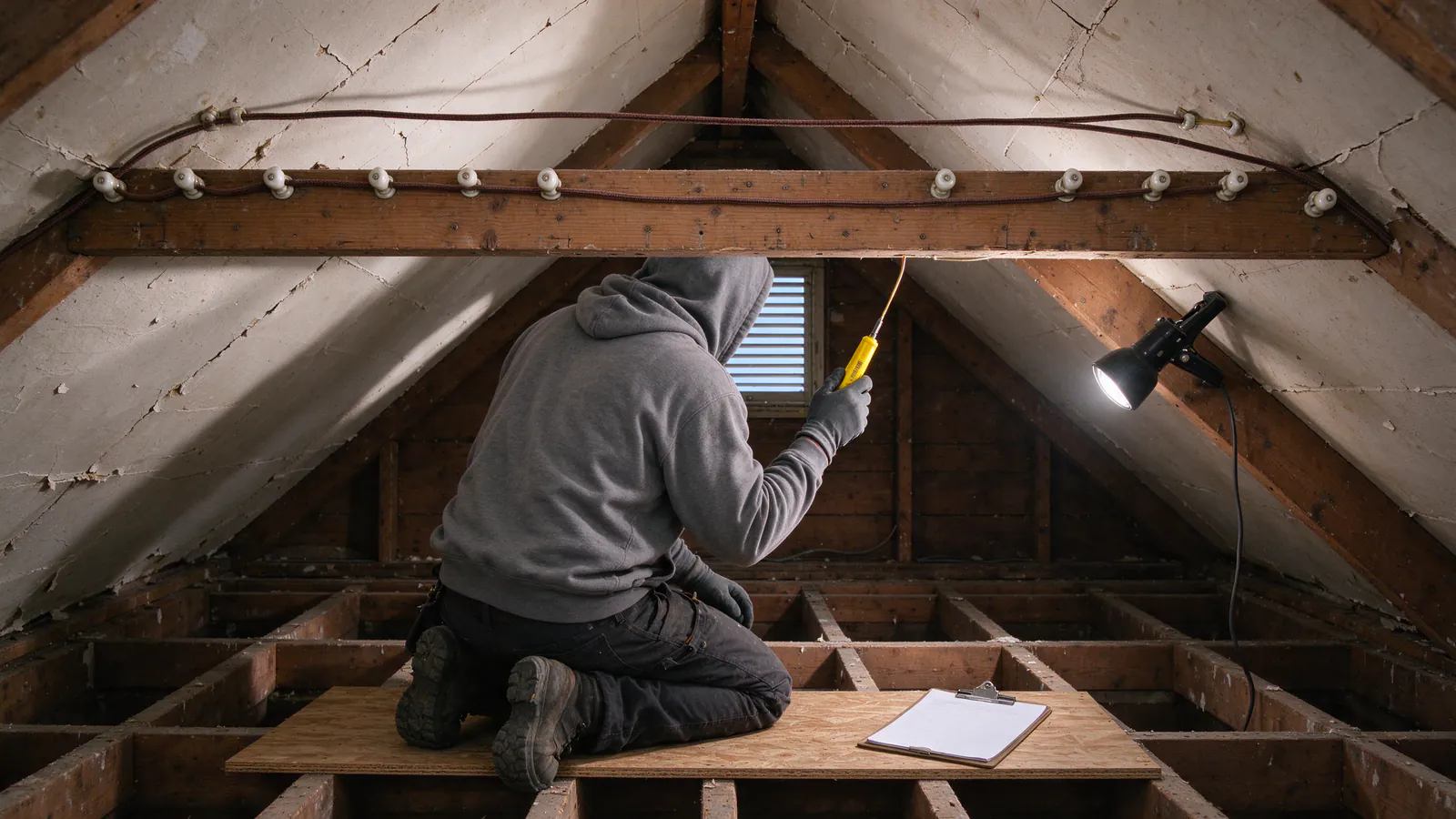
The visit starts at the panel or fuse box. Each circuit is identified, its fuse or breaker size noted, and the circuit followed out to the outlets, switches, lights and appliances it serves. Some circuits are switched off one at a time to see exactly what goes dead; runs seen in the attic or basement are tested for voltage to show whether they still carry power. The result is a map of the house by circuit rather than by room, because one original circuit often served parts of three rooms on two floors.
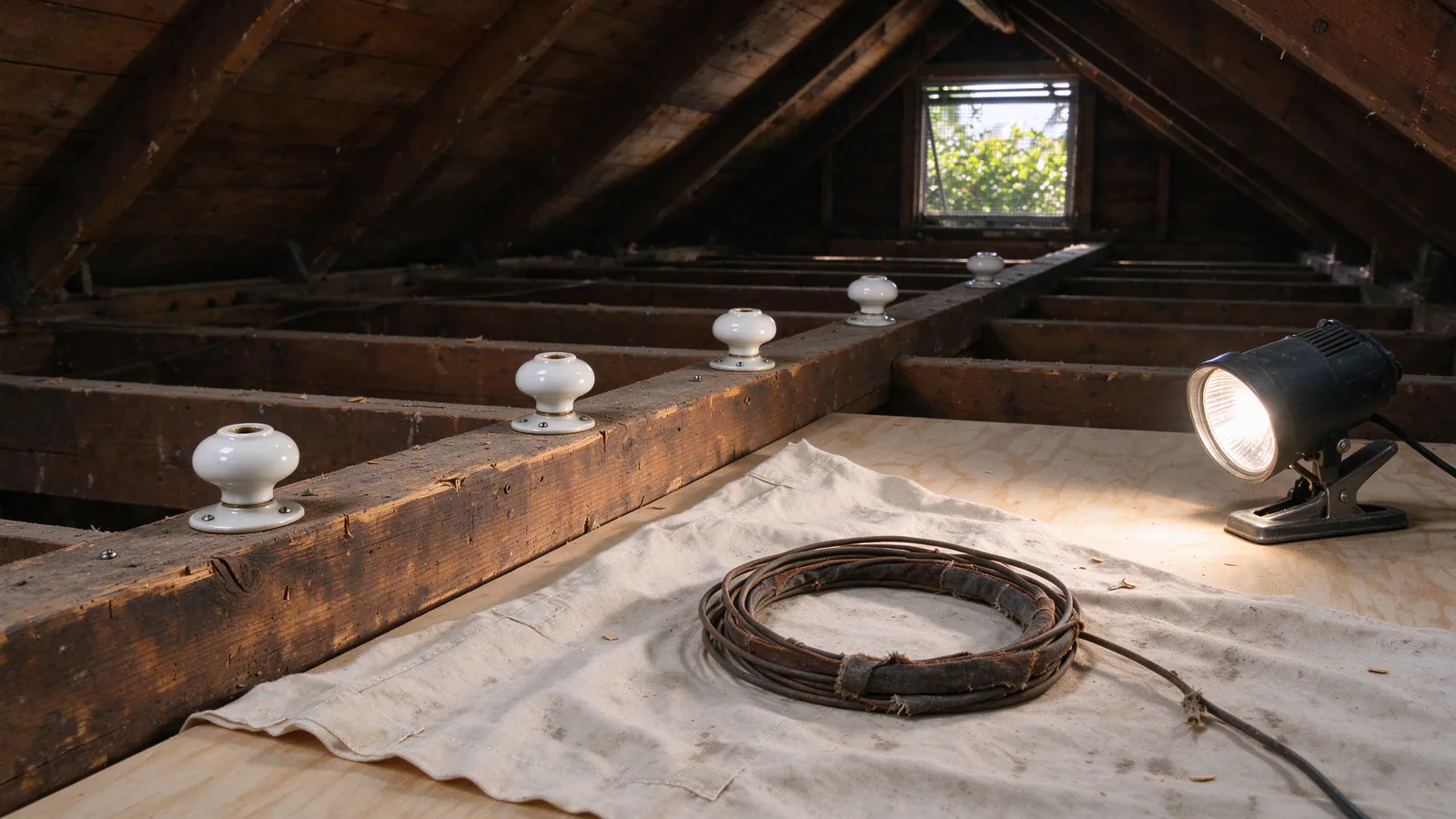
Then the reachable spaces are walked: the attic, the basement or crawlspace, and in many west-side houses the garage ceiling under the living floor. In DBI permit descriptions that name knob and tube, filed from January 2016 to October 2026, about one in eleven mention a basement, crawlspace or garage, which is where much of this wiring can still be seen. Nothing is pulled, unwrapped or moved to look at it. Old conductor insulation can crack when handled, and a run that looks abandoned may still be live.
Circuit tracing: telling live runs from dead ones
Circuit tracing is the core of the inspection, and it is why the inspection comes before a quote. A house can show porcelain knobs in the attic and still have no live knob and tube at all, because a past rewire disconnected the old runs and left them in place. The opposite happens just as easily: a remodeled kitchen with modern outlets can sit on a cable that was spliced into an original circuit inside a ceiling, so the knob and tube upstream is still carrying the kitchen’s load.
Tracing sorts every run into one of four groups: active knob and tube; abandoned knob and tube that is disconnected; later wiring on its own circuit; and mixed circuits where the two are joined. The active vs abandoned guide explains why that distinction carries more weight than whether knob and tube is present at all. Mixed circuits get the most attention, because the joint between eras is often where a problem sits.
Reading the condition of the wiring
Once a run is known to be live, its condition is recorded where it can be seen. The inspection looks for conductor insulation that has gone brittle or cracked, most often near ceiling light boxes where decades of heat have baked it, and for damage from rodents, later framing work or a nail. It checks that wires still sit on their knobs and pass through their tubes, rather than sagging onto wood or resting against each other.
Two conditions matter more than appearance. The first is protection: a fuse or breaker larger than the old conductors can carry means the wire can overheat before the device opens, and that is recorded circuit by circuit. The second is insulation contact. Knob and tube was designed to shed heat into open air, and California Electrical Code 394.12 bars concealed knob and tube in wall, ceiling and attic spaces where loose, rolled or foamed insulation envelops the conductors, unless a licensed electrical contractor surveys it and certifies it under the code’s California exception. Insulation found over live runs goes in the findings, and the attic insulation service covers what to do about it.
Splices and junction boxes
Original knob and tube branches were spliced in the open framing and wrapped, which was the method of the time. The splices that worry an inspector are the later ones: a length of modern cable twisted onto an old run inside a ceiling with no box, a connection buried under attic insulation, or a junction box whose cover is missing or whose cable enters with no clamp. Each one is a point where two wiring systems with different insulation and different protection meet.
Junction boxes in the reachable spaces are checked for what they join: two later cables, a later cable and knob and tube, or a mix that ties a modern circuit to an original neutral. Boxes buried under insulation, or connections that should be in a box and are not, are listed with their location. They are the main reason a modern-looking circuit can still depend on knob and tube, and the main reason a partial replacement has to define its boundary carefully.
What the findings can and cannot tell you
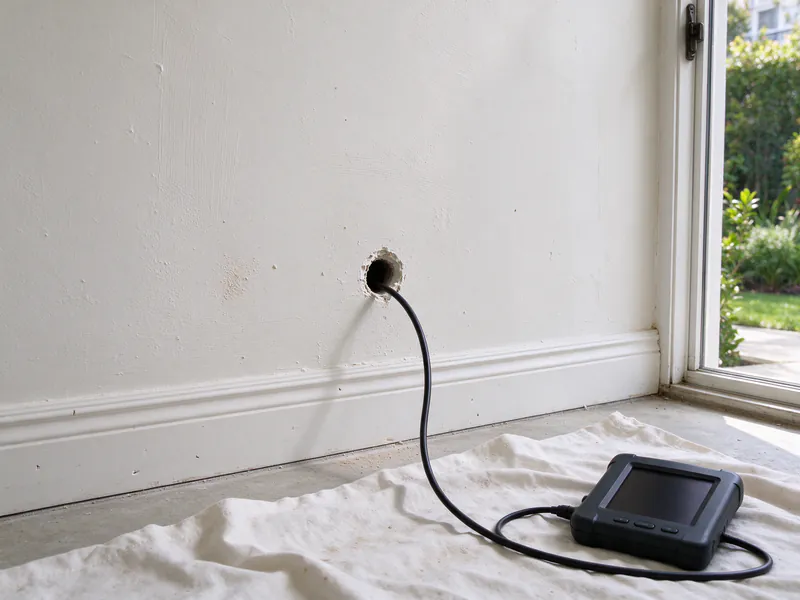
An inspection can tell you which circuits are live on knob and tube, what they feed, how they are protected and what condition their visible parts are in. It cannot see inside every closed wall. A plaster cavity between an attic entry point and an outlet box is inferred from testing, not observed. The written findings should say which conclusions come from testing, which from looking, and which spaces could not be reached, so nobody later mistakes a careful inference for a guarantee.
It also cannot answer questions only other parties decide. Whether existing knob and tube is acceptable is partly a code question and partly a carrier’s or lender’s decision. The code side is narrower than many owners expect: San Francisco’s Electrical Code says existing wiring that was legal when installed and has been maintained need not be altered, and the California legality guide covers the details. A house is not declared safe or unsafe by an inspection; the findings describe conditions and leave the scope decision to you.
Need a circuit map of your house?
The inspection traces every circuit and records what is live, what is dead and what is joined between the two.
From inspection to scope
The findings point to one of a few scopes. Where only a few circuits remain live and they are sound, unburied and correctly protected, leaving them in service and monitoring them can be a reasonable choice. A single damaged run or bad splice may call for a targeted repair. Where a remodel already replaced most of the house, partial replacement of the remaining circuits is usually the better value; where most circuits are original or several eras are spliced together, whole-house rewiring replaces them all. Runs found dead are disconnected at both ends and removed where reachable, which is the work of knob and tube removal.
If replacement follows, the inspection’s circuit map becomes the basis of the written scope and price, and the panel’s condition and spare capacity show whether an electrical panel upgrade belongs in the same plan. The is knob and tube dangerous guide explains which findings make work more urgent and which do not.
Buying, selling and insulating
Three events tend to put an inspection on the calendar. On a sale, California Civil Code 1102.6i requires sellers or their agents, for transfers on or after January 1, 2026, to give buyers a statement that it may be advisable to have a qualified professional inspect the electrical system, and that substandard or faulty wiring may make insurance difficult to obtain. Buyers use the findings to price a rewire into an offer, which the buying guide covers; sellers use them to disclose accurately, covered in the selling guide.
The third event is insulation. An attic cannot be insulated over concealed live knob and tube without the electrician’s survey and certification the code describes, or removal first. BayREN announced $300 toward a licensed electrician’s certification that knob and tube is inactive, for income-qualified PG&E customers in homes of four or fewer units that are doing an EASE Home weatherization project; its program page shows only the $2,000 remediation offer, so confirm the $300 with BayREN. The contractors supply the certification and Fog City SF Knob and Tube helps with the rebate paperwork; BayREN decides eligibility. In Berkeley, the city’s Form #146 asks the electrician to certify one of three conditions before attic insulation is inspected, which the Berkeley page explains.
If you want a first read before booking, the knob and tube risk assessment sorts what you already know about the house, and the identification guide shows what to look for without touching anything.