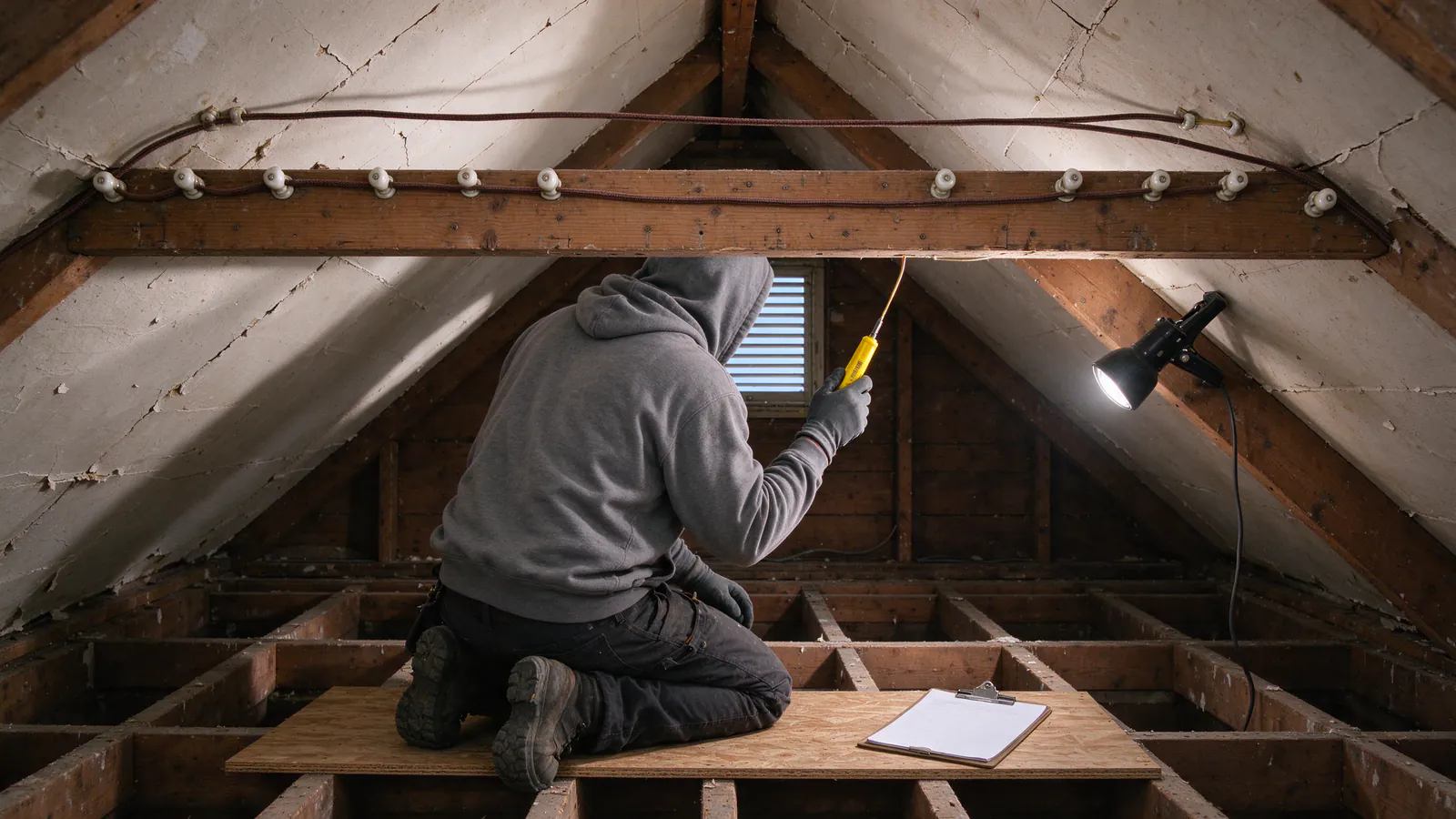
An insulation project can stop at the attic hatch when the installer finds porcelain knobs on the joists. Fog City SF Knob and Tube clears attics with knob and tube wiring so they can be insulated, in San Francisco and the East Bay. The company tests the attic circuits, plans the work and manages it with the insulation schedule; the electrical work is carried out by licensed and insured electrical contractors. Every circuit that passes through the attic is either certified under the code’s conditions, replaced and disconnected, or confirmed inactive before insulation covers it.
The Association of Bay Area Governments, which runs BayREN, put it plainly when announcing its rebate: knob and tube can keep homeowners from moving forward with upgrades, because insulating over it or adding high-wattage appliances can lead to serious fire risks. In DBI’s electrical permit data, 22 of the 2,023 knob and tube permits filed from January 2016 to October 2026 mention an attic, and 4 mention insulation. Those are the jobs where someone wrote it down; other attic circuits are replaced under a wider whole-house rewiring or partial replacement permit.
Why insulation and knob and tube conflict
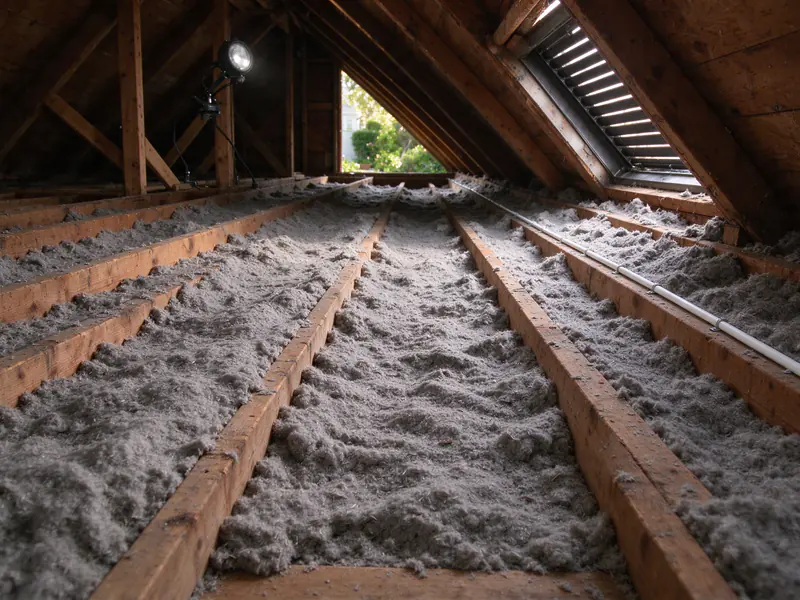
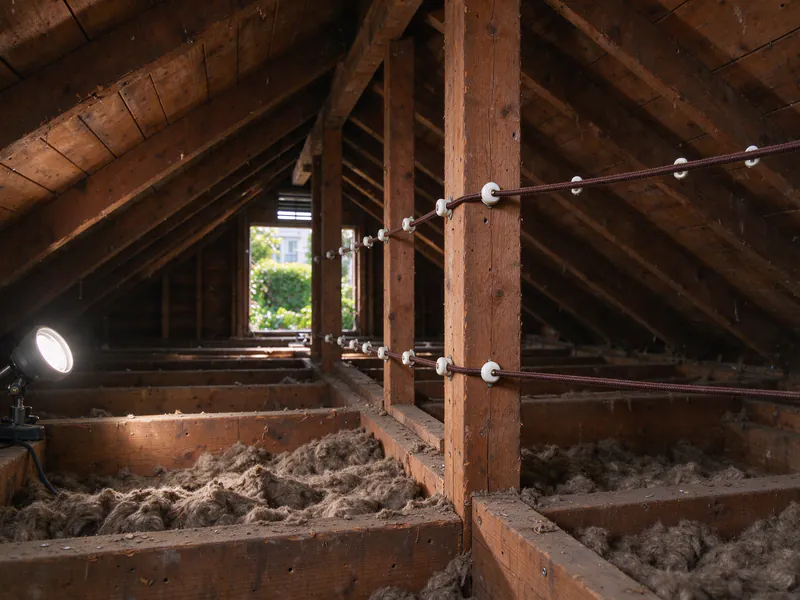
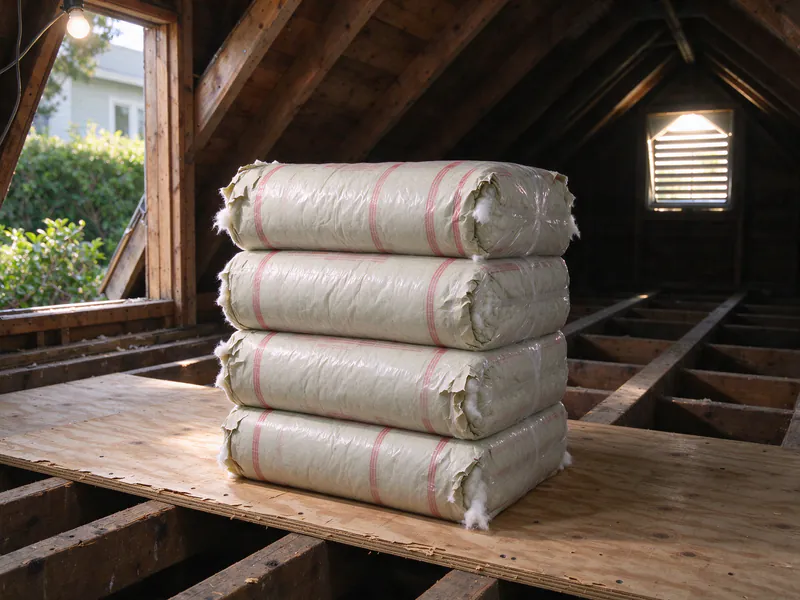
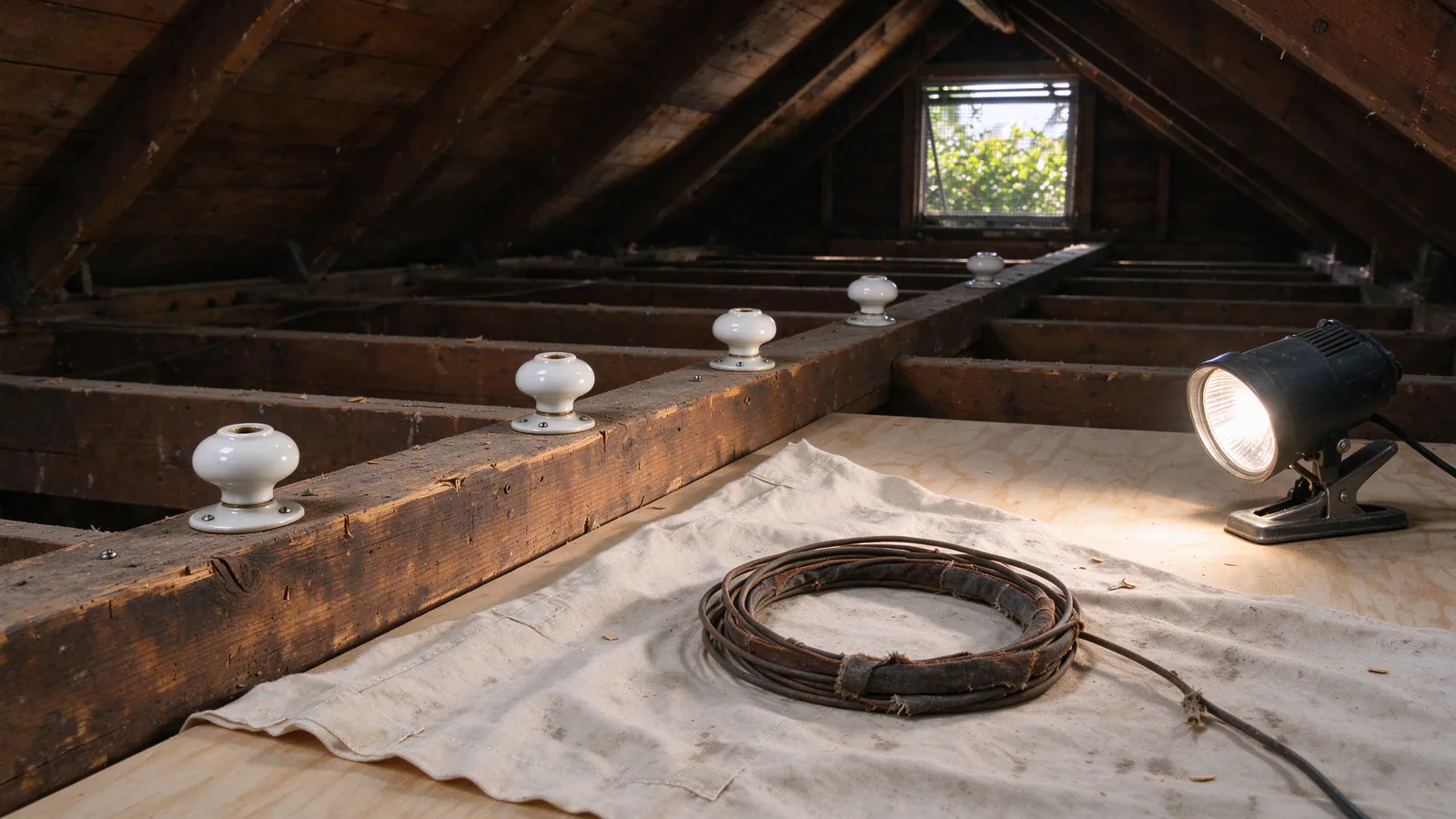
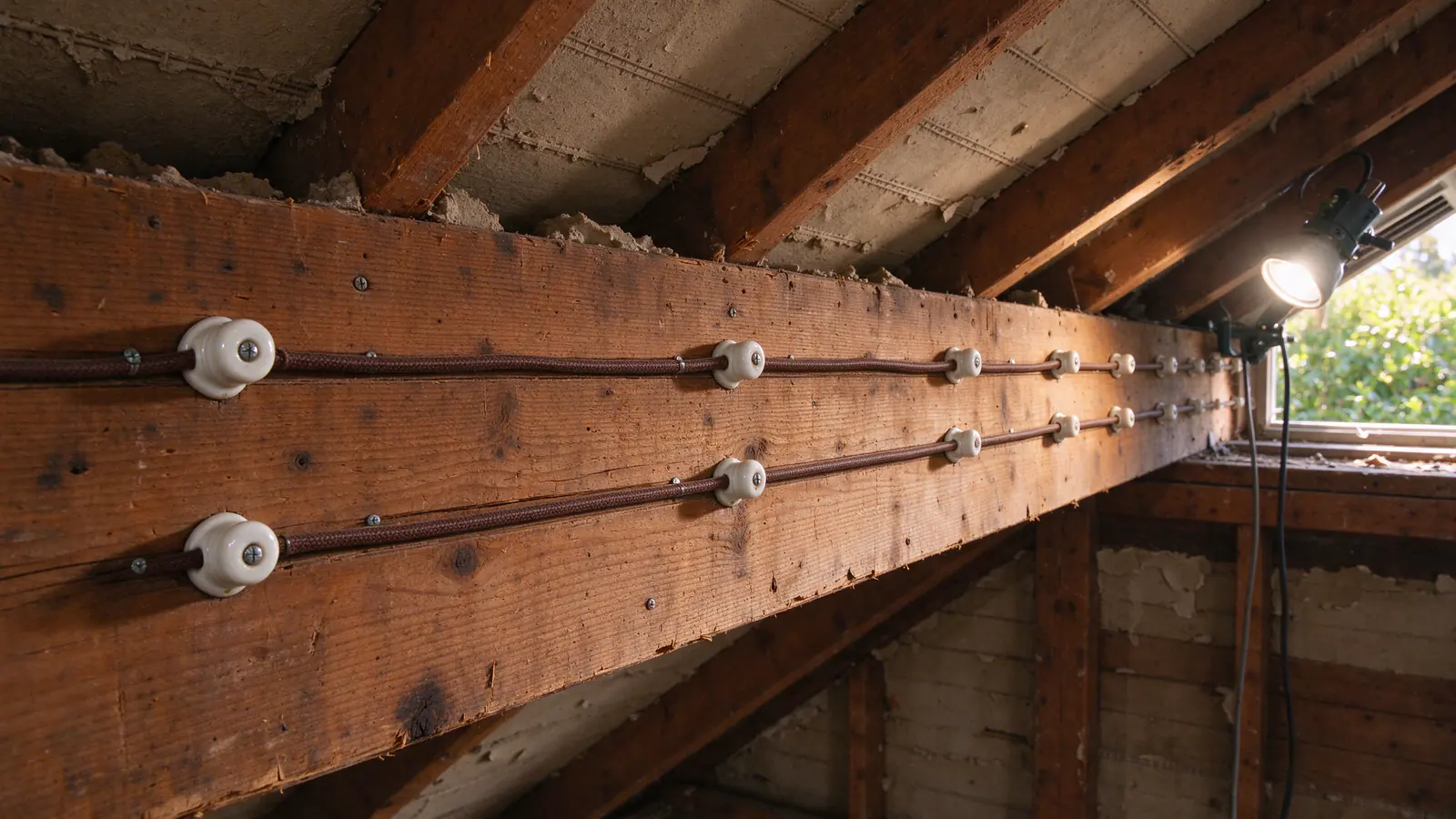
Knob and tube was designed to run in open air. Each conductor travels separately on porcelain knobs, inches from its partner, and sheds the heat it makes into the space around it. The current a wire can carry safely depends on that: a conductor in open air can carry more than the same conductor packed in a material that holds heat. Blown-in or batt insulation that surrounds the wires takes away the air the design depends on.
The heat matters because of what the wire is wearing. Original conductors are insulated with rubber under a cloth covering, and rubber hardens and cracks faster when it runs warm. A circuit that has been fused larger than its conductors can carry, an alteration some old circuits have had, makes the problem worse, because the protection no longer trips before the wire overheats. Insulation also hides the wiring, so splices, damage and rodent nests go unseen. None of this means every insulated attic is about to fail. It means the condition of the wiring has to be known before it is covered, which is the logic the California code follows. The guide to whether knob and tube is dangerous covers the wider risk picture.
What California’s code allows
Article 394.12 of the California Electrical Code says concealed knob and tube shall not be used in hollow spaces of walls, ceilings and attics where loose, rolled or foamed-in-place insulation envelops the conductors. California adds an exception. Insulation is permitted where:
- a California-licensed electrical contractor surveys the wiring and certifies that it is in good condition, with no deterioration, improper overcurrent protection, or improper connections or splices
- the certification is filed with the building department, and a copy goes to the owner
- accessible insulated areas are posted with a caution notice in English and Spanish
- the insulation is noncombustible and contains no electrically conductive material
- the building department may still require permits and inspection for the insulation
San Francisco’s Ordinance 228-25 adopted the 2025 California Electrical Code with local amendments, operative January 1, 2026, and those amendments make no change to the knob and tube article. No San Francisco DBI form or bulletin for the certification was found, so the code’s own steps are followed and the filing is confirmed with DBI per project. The California legality guide covers the article as a whole.
What happens on the first visit
The first visit tests every circuit in the house and follows the ones that pass through the attic. A live knob and tube run over a bedroom ceiling may feed outlets on two floors; a run that looks original may already be dead because a remodel moved its loads. The active vs abandoned guide explains why testing, not appearance, decides that.
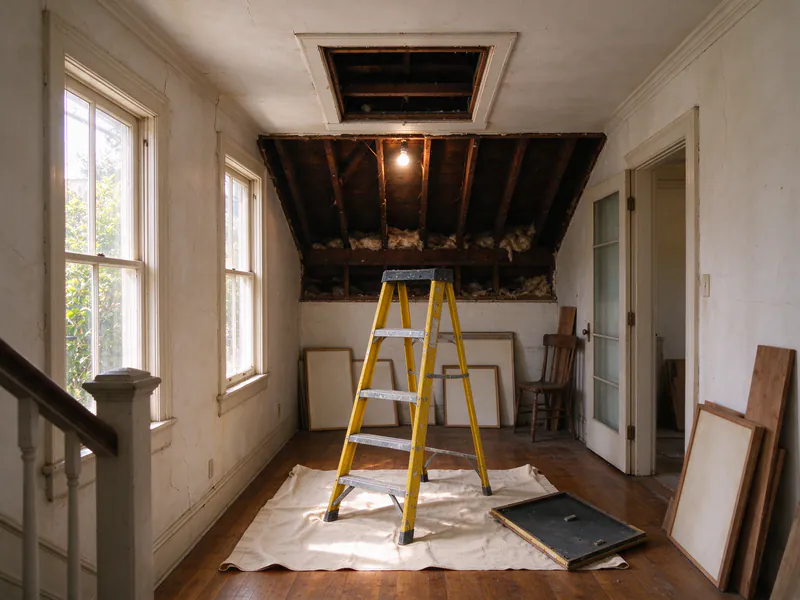
The attic itself is looked at without disturbing the wiring: splices, cracked or missing insulation on the conductors, wires pulled off their knobs, anything already buried, and how the joists and hatch allow cable to travel. The fuses or breakers protecting each circuit are checked against the conductors they serve. The result is a written finding for each attic circuit, fit to certify, needs replacement, or inactive, and a written scope and price for the work that follows.
Certify, replace or retire
Certification fits a short list of attics: original wiring in good condition, protected correctly, with no later splices. It keeps the circuits in service under the insulation, with the paperwork and posted notices the code requires. Any one failed condition rules it out: a later splice, an oversized fuse or cracked conductor insulation means the circuit cannot be certified as it stands.
Replacement is the answer whenever certification is not. New grounded cable is run across the open joists to the boxes below, usually the easiest wiring in the house to replace, and the old attic runs are disconnected at both ends and removed where reachable or identified and terminated. Replacing the attic circuits often also replaces the top-floor ceiling lights and the wall outlets fed from above, so the work can reach more of the house than the attic alone. Where testing shows runs are already dead, they are retired and documented, which is also what knob and tube removal covers.
Insulation booked, wiring unknown?
Find out which attic circuits are live before the installer arrives, and what clearing them involves.
When insulation is already there
Some attics were insulated years ago, right over the wiring. Buried knob and tube is hard to certify, because the survey has to confirm the condition of wiring the insulation hides. The practical path is to test which buried circuits are live, route new cable for those loads, and disconnect the old runs where they leave the panel and where they reach the last device. Where the old insulation has to be pulled back to reach a box or a splice, that is coordinated with the insulation contractor, so the attic is opened once and closed once.
BayREN EASE Home and the order of work
BayREN’s EASE Home program offers up to $2,000 reimbursed to fix active knob and tube, applied to an EASE Home weatherization project. BayREN’s announcement also listed $300 toward a licensed electrician’s certification that the knob and tube is inactive; the program page does not show that line, so confirm it with BayREN before counting on it. EASE Home covers single-family homes with four or fewer units built before 2010, served by PG&E, with household income at or under 120% of area median income. In San Francisco that limit is $162,450 for one person and $232,050 for a household of four. Participants must have insulation, duct improvements or induction cooking in their scope. Alameda homes on Alameda Municipal Power are outside it because the program requires PG&E customers.
The contractors supply the licensed electrician’s invoice or inactivity certification the rebate needs, and the company helps with the rebate paperwork. Approval is the program’s decision. The BayREN rebate guide covers eligibility in more detail.
Selling, RECO and attic insulation
San Francisco’s Residential Energy Conservation Ordinance requires owners, before selling, to get an inspection, install basic energy and water conservation measures and obtain a certificate of compliance, and its energy measures may include insulating attic space. How RECO treats an attic with knob and tube is not spelled out in what the city publishes, so it is confirmed per house. A sale can be the moment the attic question arrives; the guide to selling a house with knob and tube covers the rest of escrow.
What attic work costs
No published range exists for attic knob and tube work on its own. The price depends on how many circuits run through the attic, how many are live, how easy the attic is to move in, whether insulation is already there, and whether the circuits can be replaced from above without openings in the rooms below. Current DBI fees start at $305 for a permit covering up to 10 outlets or devices, with one inspection, and step up with the device count. The San Francisco cost guide explains the wider ranges, and the cost estimator gives a first number for a whole-house job.