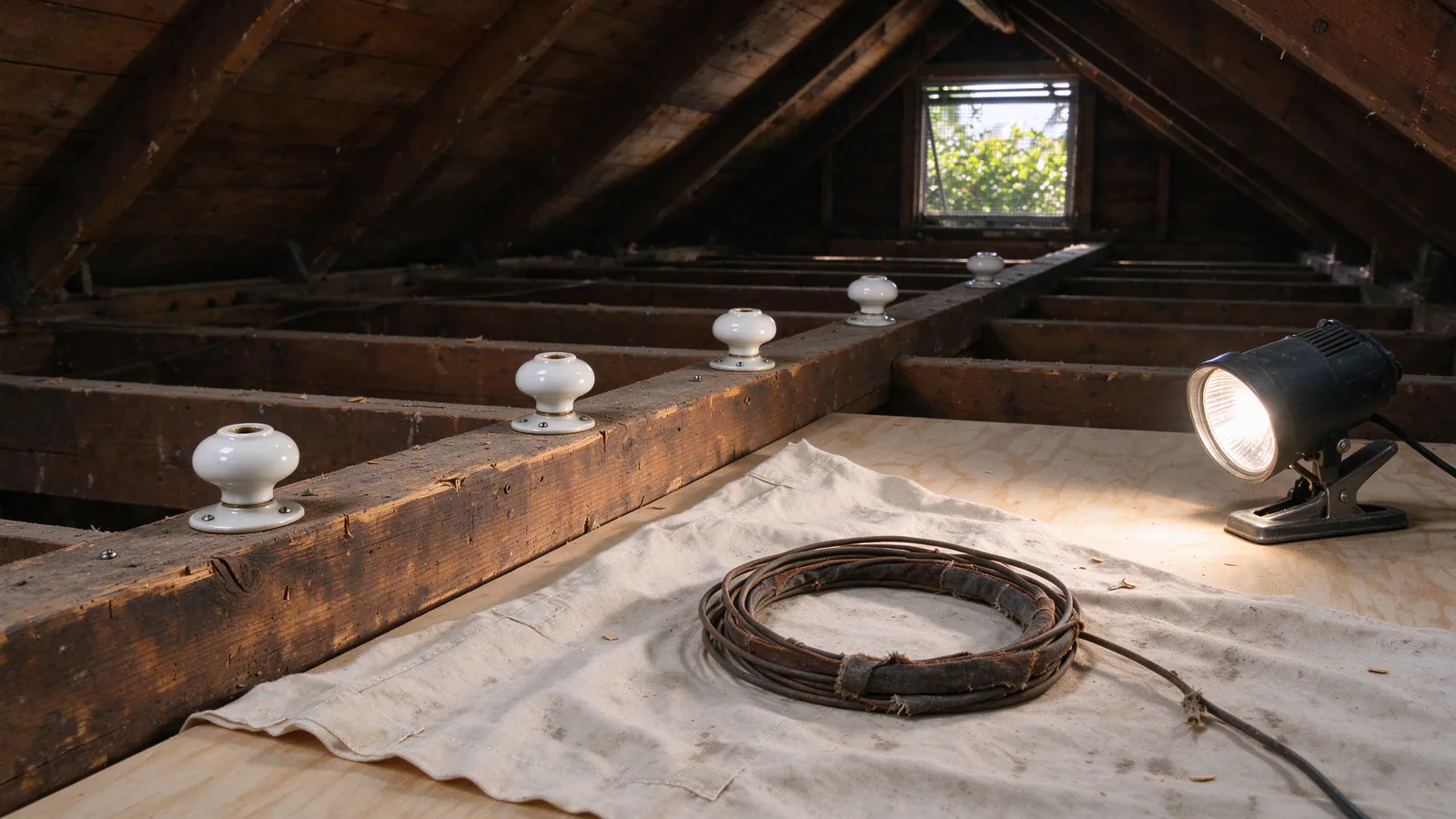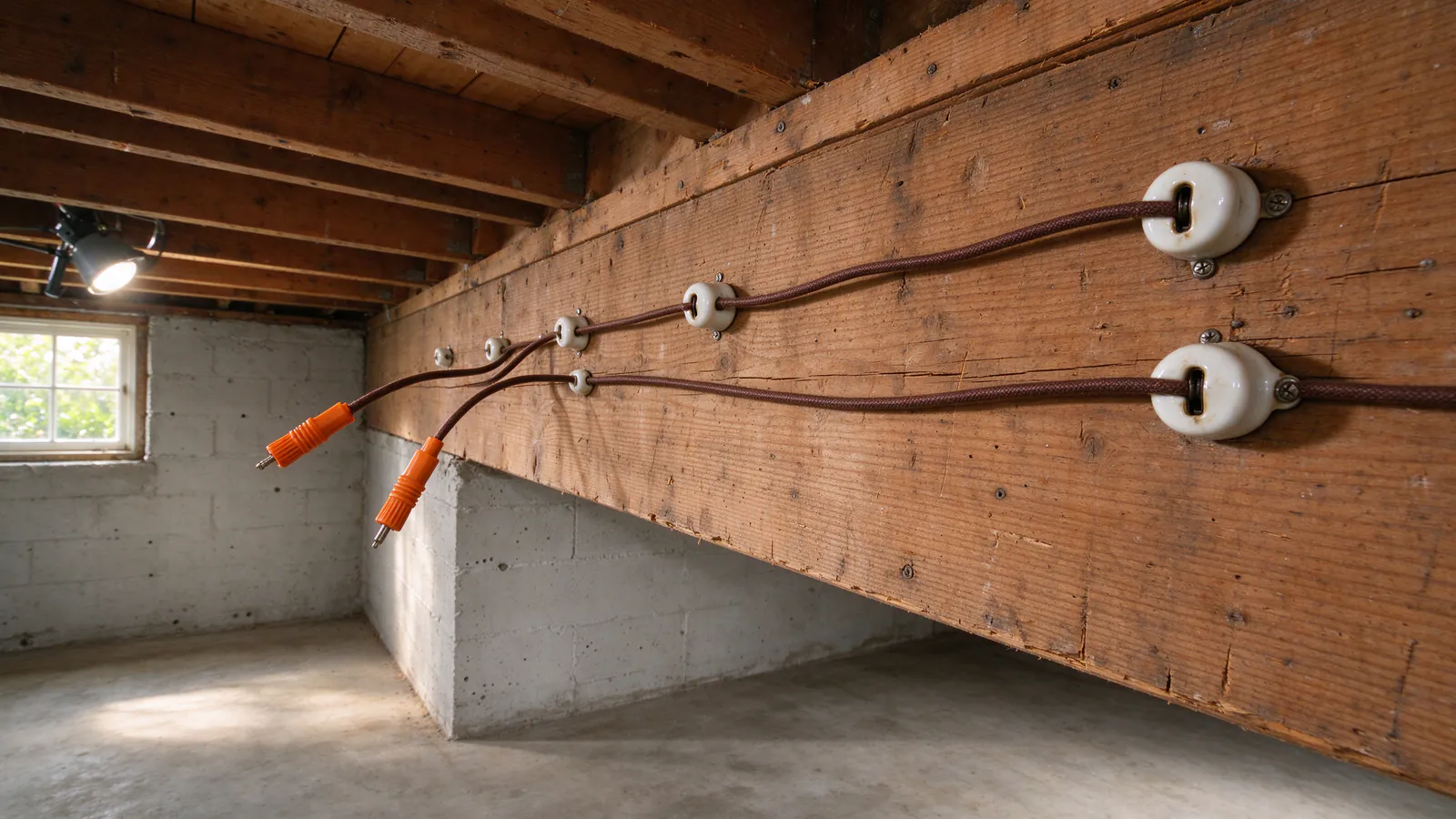
Only by testing. Active knob and tube wiring is still connected to a fuse or breaker and carries power to lights or outlets; abandoned runs have been disconnected, usually during a remodel, and often left in the walls and attic. The two look identical, and a run that seems dead can still be live through a hidden splice. An electrician traces each circuit from the panel to prove which is which.
Fog City SF Knob and Tube manages knob and tube inspection, removal and replacement in San Francisco and the East Bay, with the testing and electrical work carried out by licensed and insured California C-10 electrical contractors. Every circuit is tested at the walk-through, and old runs retired during the work are disconnected at both ends, removed where they can be reached and otherwise terminated. For taking out dead runs on their own, see knob and tube removal.
Why live or dead matters more than present or absent
Many older San Francisco houses still have porcelain knobs in the attic or basement. What that means depends almost entirely on whether the wire on them carries current.
- Hazard. Every failure mechanism in the knob and tube danger guide, from cracked insulation to overheated splices, needs current. A run that is truly disconnected at both ends is inert.
- Insurance. The City of Berkeley’s energy ordinance materials say many insurers will not issue or renew policies for houses with active knob and tube. Homeowners report carriers accepting knob and tube that has been disconnected in place, and one San Francisco permit records an insurer that “advised owner to make it redundant and disconnect.”
- Insulation. The California Electrical Code bars using concealed knob and tube where insulation envelops it. Berkeley’s city form for insulating over knob and tube treats wiring that is disconnected, not live or removed as one acceptable result, so proving it dead is one way to clear an attic.
- Rebates. BayREN’s EASE Home offer pays toward remediating active knob and tube, and asks for a licensed electrician’s certification of knob and tube inactivity. The BayREN rebate guide has the details.
How houses end up with both
Few San Francisco houses are all one or the other. Over a century, remodels replaced the wiring that was easy to reach, often in a kitchen, a bathroom or a basement, and either disconnected the old runs or connected new cable to them. Retired runs could be left in place rather than pulled from finished walls, and the code still allows that if they are handled properly.
The result is a mix: some knob and tube live, some dead, some modern cable feeding old runs through a splice in a ceiling. One San Francisco buyer reported finding an active knob and tube line that “someone missed” in a previous renovation. Of 2,023 San Francisco electrical permits naming knob and tube, filed from January 2016 to October 2026, 121 describe de-energizing or abandoning it, a reminder that disconnection is itself a common scope. The knob and tube mixed with Romex guide covers where those joints between eras tend to sit.
What “abandoned” should mean
A run is properly abandoned when it is disconnected at its source and at its loads, so nothing can feed it from either end. San Francisco’s electrical code then requires unused conductors and cables to be either removed or suitably identified and terminated in an approved manner.
The common failure is a run disconnected at one end only. Cutting an old circuit at the fuse box does nothing about a later splice that ties the same conductors to a live circuit in a ceiling box. Switching off a fuse or breaker is not abandonment either: the circuit is dead until someone switches it back on. Proper abandonment is recorded, so the next electrician, inspector or buyer does not have to guess.
How an electrician tells them apart
Telling active from abandoned is a test, done from the panel outward, without handling the old wiring:
- Map the circuits at the panel or fuse box. Each circuit is identified and, one at a time, de-energized to see which lights and outlets go dead with it.
- Trace accessible runs. In the attic, basement and garage, runs are followed and checked, with a non-contact tester as a first screen only and a circuit tracer or meter to confirm.
- Check the devices. Outlets, switches and fixtures are tested to see what feeds them and whether they sit on knob and tube or later cable.
- Look for the joints between eras. Where modern cable meets old conductors, the test establishes whether the old side is still part of a circuit.
- Write it down. Each circuit gets a line: what it serves, what it is wired with and whether any knob and tube on it is live.
This is not a homeowner test. Old insulation can crack when moved, and a quick reading with a pen-style tester can be wrong in both directions. The identification guide covers what you can safely look for without touching anything, and a knob and tube inspection does the testing.
What the record should show
A useful result is not “knob and tube present: yes.” It is a circuit-by-circuit list that says, for each run found, whether it is live, where it is, and what it connects to. It should also say which conclusions rest on testing and which on what was visible, because no one can see inside every closed wall. That record is what an insurer, a buyer’s electrician or BayREN will actually read, and it is what makes a later partial replacement scope precise.
Not sure what is live in your attic?
Every circuit is tested at the walk-through, and the written record marks each knob and tube run as live or dead.
Remove it or leave it terminated?
Once a run is proven dead and disconnected at both ends, the code allows it to be removed or identified and terminated. Which is better depends on where it is and what is coming next.
| Situation | Usually better | Why |
|---|---|---|
| Dead runs in an open attic about to be insulated | Remove | Clears the attic, avoids confusion under the insulation, and leaves nothing for an insurer’s photographer to question |
| Dead runs in a basement or garage ceiling | Remove where reachable | Easy access, and visible porcelain knobs prompt questions from inspectors and buyers |
| Dead runs inside finished plaster walls | Terminate and identify in place | Pulling them would mean opening walls for no electrical benefit |
| A sale or insurance review is coming | Remove what is visible, document the rest | The record matters as much as the removal |
Removal and termination are covered in knob and tube removal. Where testing finds live knob and tube that is still needed, the choice moves to repair or replacement; the knob and tube wiring guide sets out the scope options.
The inactivity certification
Several programs and cities turn the test result into a document. BayREN’s EASE Home program asks for a certification of knob and tube inactivity issued by a licensed electrician. Berkeley’s Knob-and-Tube Wiring Safety Report, which must be signed and posted in the attic before an insulation inspection, includes a box for knob and tube that is disconnected, not live or removed. Homeowners report insurers asking for an electrician’s letter covering the same ground, which an electrical inspection for insurance provides. In each case the document is only as good as the circuit test behind it.
To find out what is live in your house, call (628) 296-7628 or request an estimate with the age of the house and where you have seen knob and tube.