Cloth-insulated cable followed knob and tube into the walls of older houses, and the two can end up on the same circuit. Fog City SF Knob and Tube replaces cloth-insulated wiring in San Francisco and East Bay houses, together with any knob and tube it is connected to. The company tests the circuits, plans the work and manages it; the electrical work is carried out by licensed and insured electrical contractors, under DBI permits.
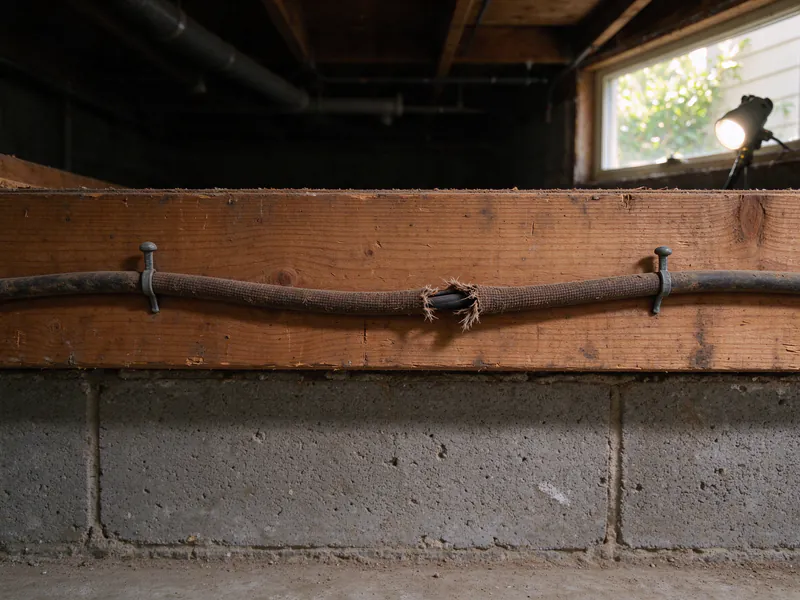
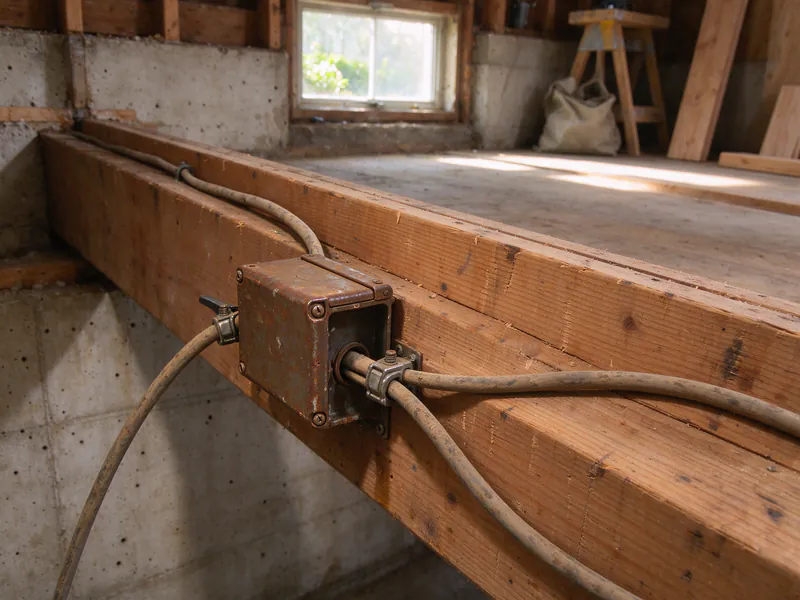
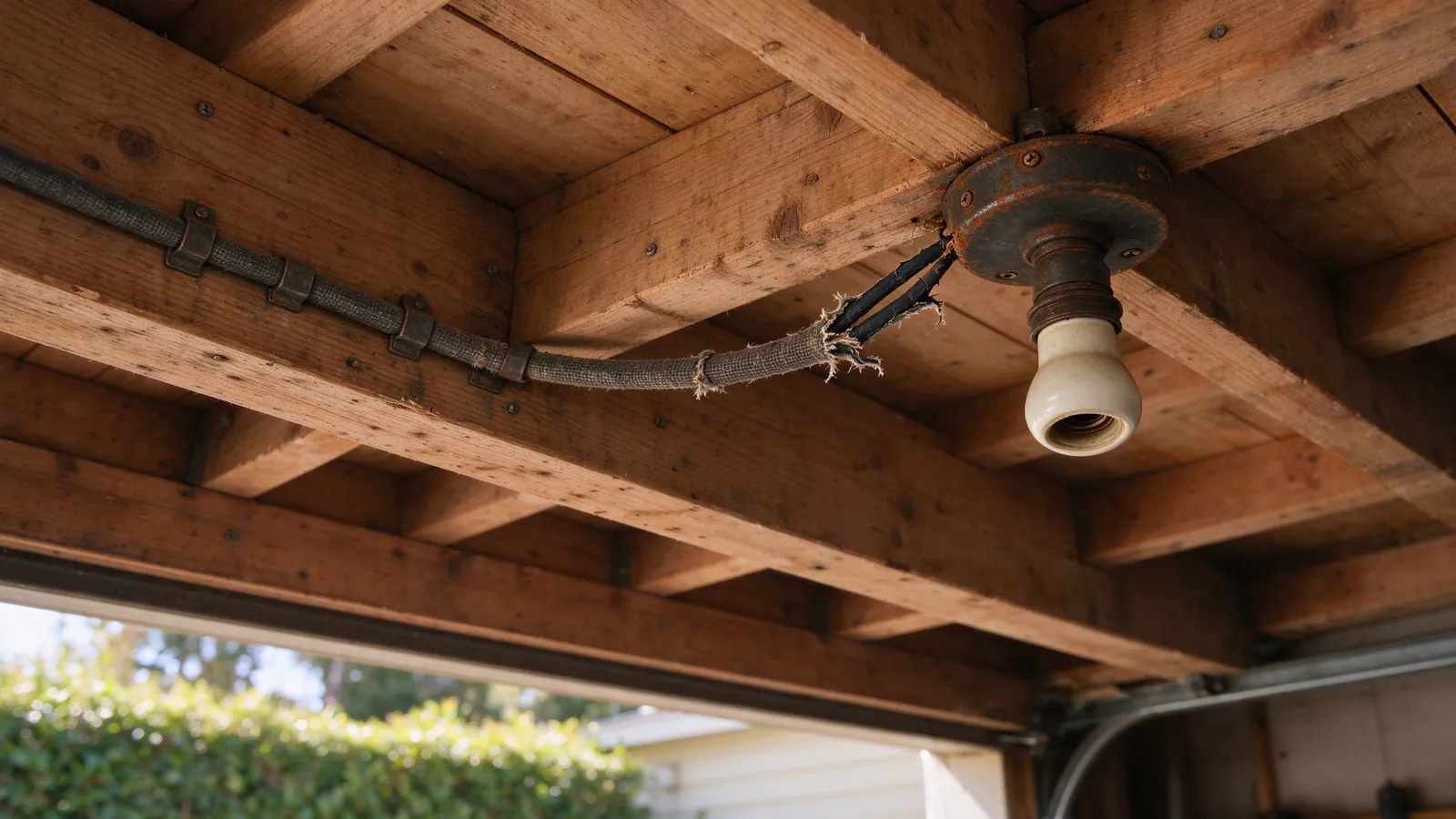
Cloth wiring is the cable that followed knob and tube. Instead of two separate wires on porcelain knobs, it bundles two rubber-insulated conductors inside a woven cloth sheath, which made it faster to install. It solved some of knob and tube’s problems and kept others: the rubber still ages, and it usually has no ground wire. Because it was installed while knob and tube was still in use, the two are often found in the same house, sometimes on the same circuit. The guide to knob and tube vs cloth wiring explains how to tell them apart; this page covers replacing it.
Where cloth wiring shows up in San Francisco
The houses most likely to hold it are the ones built as knob and tube was giving way to cable. SF Planning’s Sunset District context statement records that vast areas of the Sunset and Richmond districts in western San Francisco, and the Excelsior in the south, were built out from the 1920s through the 1940s with tract housing, mostly single-family homes with integral garages. Most Sunset construction happened between 1925 and 1950, typically a stucco single-family house with a garage at the ground story and living space above. A house from the early part of that span may have original knob and tube; one from the late 1930s or 1940s may have cloth cable instead; some have both, with the newer cable added in a later room or spliced onto an original circuit. Testing, not the year on the deed, settles which.
Permit records do not show this well. Of the legacy electrical permits filed since January 2016, only 3 descriptions mention cloth wiring by name, so it rarely appears in the record even where it is replaced. For those neighborhoods in particular, see Sunset and Parkside and the Richmond District.
Does cloth wiring need to be replaced?
No San Francisco rule requires it. The city’s electrical code says existing wiring need not be altered if it was legal when installed and has been maintained. Owners replace it for practical reasons: aging rubber insulation, no ground wire, splices to knob and tube, an insurer’s question, or new loads it was never sized for.
Each of those reasons is specific to the house. A few cloth circuits in good condition on a modern panel are a different situation from a house where cloth cable feeds the kitchen and was tapped into a knob and tube ceiling run. That is why the scope comes from testing. Where only a handful of old circuits remain, a partial replacement is often the sensible scope; where most of the house is original, a whole-house rewire replaces every era at once.
What happens on the first visit
The first visit tests every circuit and records what each one runs on: knob and tube, cloth-insulated cable, later cable, or a mix joined by splices. Exposed runs in the garage, basement and attic show where the eras meet, and the panel or fuse box shows how each circuit is protected and how much room there is for new ones. The finished map, a route plan and a written scope and price that lists each opening and who closes it come out of that visit. A knob and tube inspection covers the testing on its own when no work is planned yet.
Why the rubber matters
The weak point of cloth wiring is under the cloth. Each conductor is insulated with rubber, and rubber hardens and cracks with age and heat. The cloth sheath frays and can hide cracked insulation beneath it. The worst spots are predictable: at ceiling fixtures, where the heat of a lamp has baked the insulation for decades; at tight bends; and wherever a later worker pushed the cable back into a crowded box. Brittle insulation also cracks when it is moved, which is one reason not to handle old cable to look at it and one reason replacement disconnects old runs rather than reusing them.
Cloth wiring spliced to knob and tube
Because cloth cable arrived while knob and tube was still in service, some houses joined the two. A remodel might have run cloth cable from a new kitchen back to an original ceiling splice; a later owner might have joined modern cable to both. Each joint is a place where the wiring changes era, and where problems concentrate: a splice outside a box, an ungrounded run feeding a grounded-looking outlet, or a fuse sized for the newer cable protecting the older one. A replacement scope follows each circuit to its end so no old section stays connected behind a new outlet. The guide to knob and tube mixed with Romex explains how those hybrids form.
Cloth cable in the garage, knob and tube in the attic?
A circuit-by-circuit test shows where the eras meet and which circuits need replacing to clear both.
Grounding and three-prong outlets
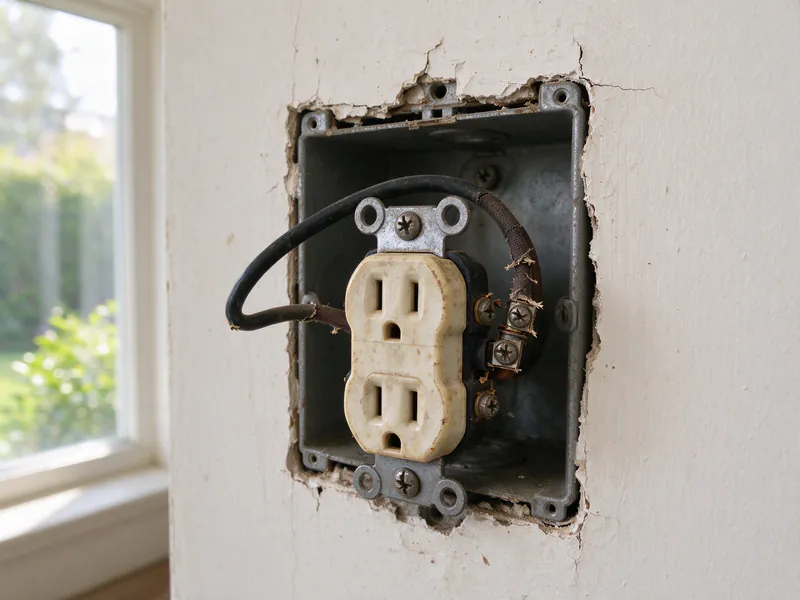
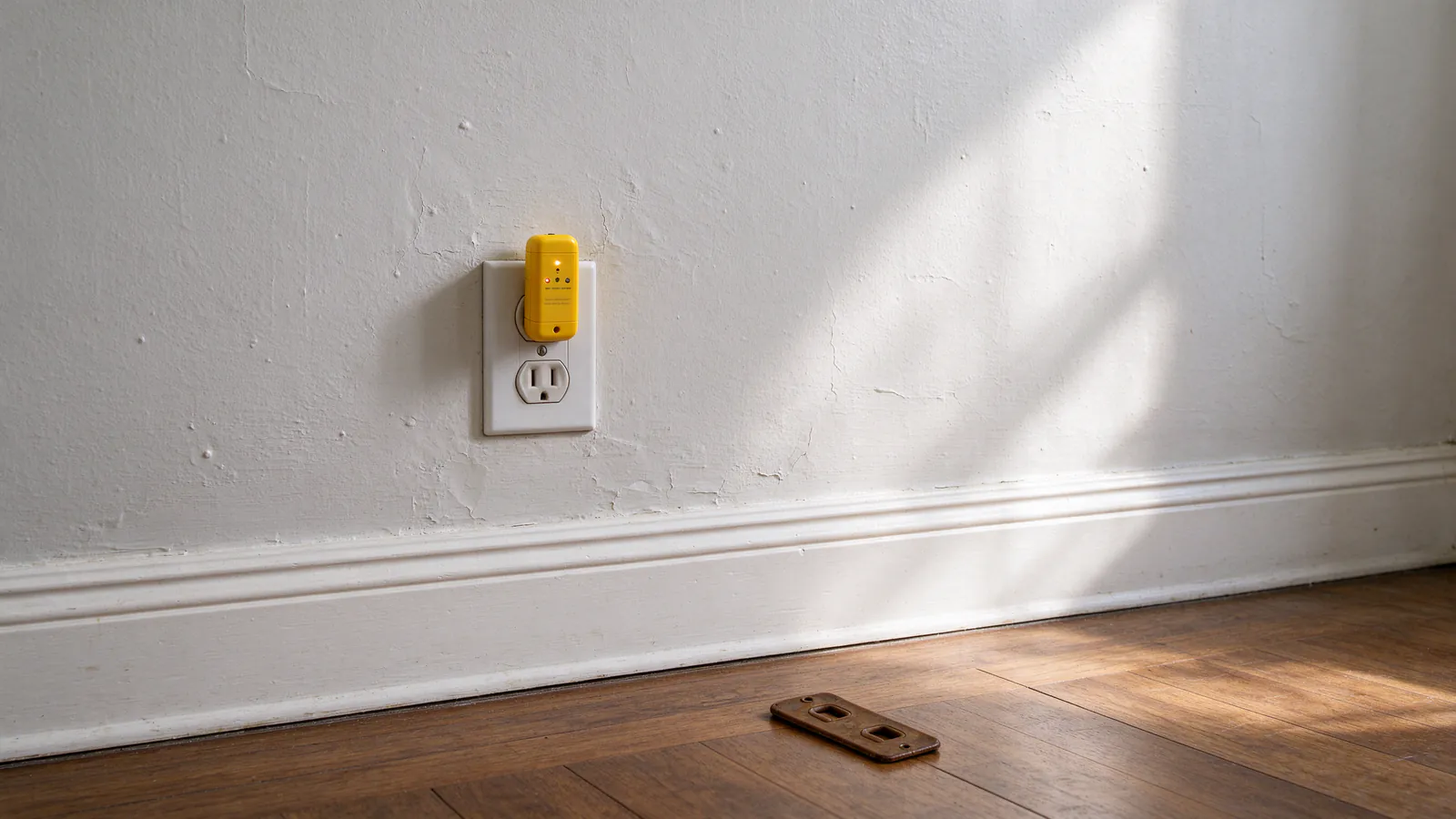
Cloth-sheathed cable usually has no equipment grounding conductor, so the outlets it feeds are ungrounded even when a previous owner fitted three-prong receptacles. A three-prong outlet does not prove a ground; testing does. The code offers some options for replacing receptacles on ungrounded circuits, such as ground-fault protection, but none of them adds a ground wire. A new circuit does. Grounding outlets in an old house covers those choices, and the three-prong outlet guide explains why the faceplate can mislead.
Replacing cloth wiring with modern cable
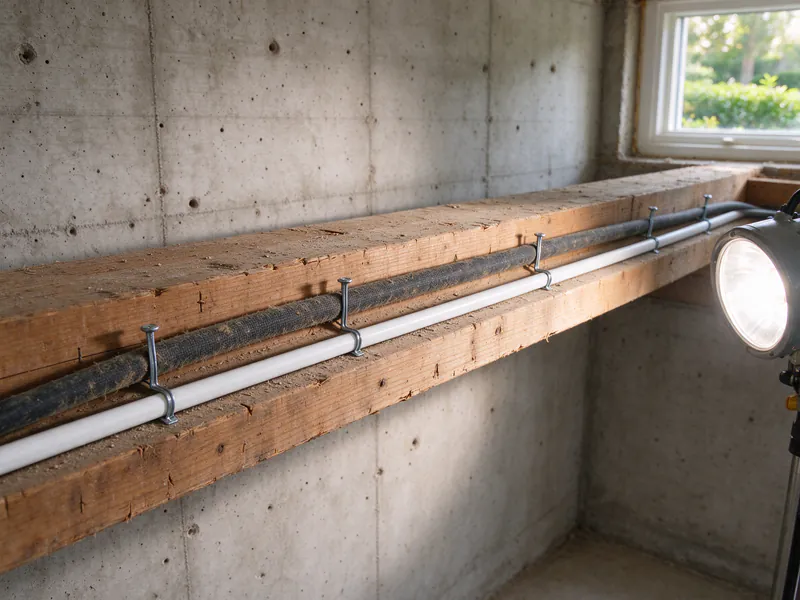
Inside a house or dwelling unit, the usual replacement is nonmetallic sheathed cable with a ground wire, the cable most people call Romex. San Francisco’s local amendments add two limits that matter in the houses where cloth wiring is common. Premises wiring less than 8 feet above a walking surface is considered subject to physical damage, which matters in the ground-floor garages of Sunset, Richmond and Excelsior tract houses: cable run below that height along a garage wall or ceiling needs protection or a different wiring method. And nonmetallic cable is not permitted in some multifamily common areas.
Routes follow the house. In a single-family house over a garage, the garage ceiling is often the main path to the floor above, and the attic reaches the ceilings below it. Where late-1930s houses have sheetrock walls instead of plaster, openings are faster to cut and close; where they have plaster, plaster-wall rewiring methods apply. New circuits are built to the California Electrical Code San Francisco adopted, operative January 1, 2026, with arc-fault, ground-fault and tamper-resistant protection where it is required; the AFCI and GFCI guide explains each. Where new circuits push past what the panel can carry, an electrical panel upgrade is planned with the rewire.
What it costs to replace cloth wiring
No published range covers cloth wiring alone, because it is almost always priced as part of a wider rewire. For a whole-house rewire of a San Francisco single-family home, a typical range for the electrical scope is $20,000 to $50,000 or more, with permits; a panel or service upgrade is separate, typically $3,000 to $10,000. A smaller scope is priced by its circuits. Current DBI fees run $305 for a permit covering up to 10 outlets or devices, $450 for 11 to 20, $580 for up to 40 including a service upgrade of up to 200 amps, and $740 for more than 40. The San Francisco cost guide explains what moves the price, and the cost estimator gives a first number.
Insurance and sale
Old wiring of any kind can come up when a policy is written or a house changes hands. Since January 1, 2026, California Civil Code 1102.6i requires sellers or their agents to give buyers a statement that it may be advisable to have the electrical system inspected, and that substandard, recalled or faulty wiring may make property insurance difficult to obtain. Replacement with a permit and a written circuit record gives buyers and carriers something concrete; an electrical inspection for insurance documents the house before or after the work.