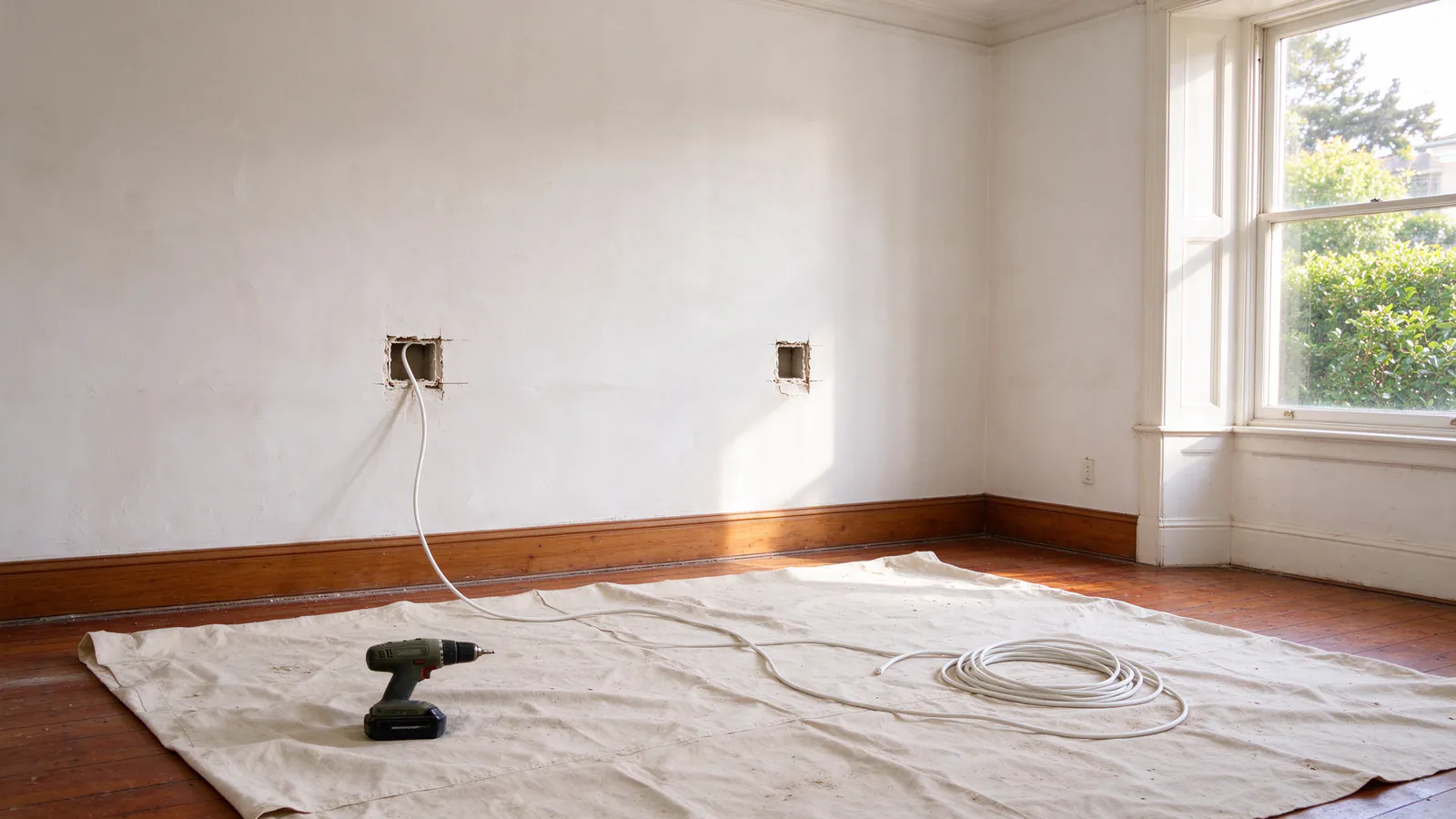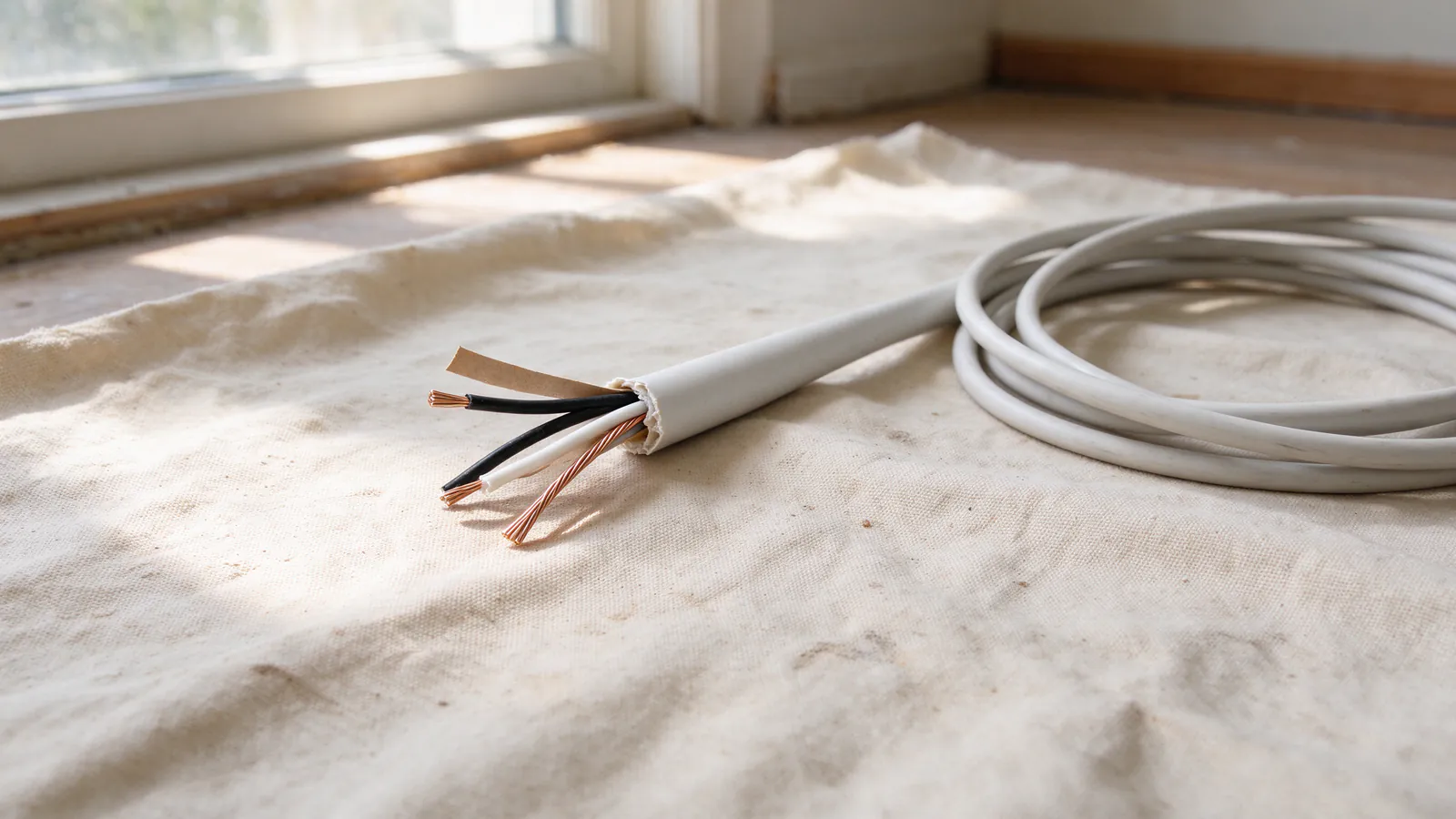
Cable replaced it. Instead of two separate wires running on porcelain knobs through open framing, later houses were wired with cable that bundles the conductors in one jacket: first cloth-covered cable, usually with no ground, then nonmetallic sheathed cable with a ground wire, the NM cable many people call Romex. Armored cable and wires in conduit are used where the code or the location calls for them.
Fog City SF Knob and Tube manages whole-house rewiring and knob and tube replacement in San Francisco and the East Bay, and the electrical work is carried out by licensed and insured California C-10 electrical contractors. This guide covers the wiring methods that followed knob and tube, what a rewire installs today, and the San Francisco code amendments that decide which method goes where.
From open wiring to cable
Knob and tube ran the hot and the neutral as separate rubber-insulated wires, spaced apart and held off the framing on porcelain, so each one shed heat into the surrounding air. That design needed open cavities and a lot of labor. The knob and tube wiring guide covers how it worked and where it falls short.
Cable put the conductors together. The first common kind in many houses was cloth-covered cable: rubber-insulated conductors wrapped together in a woven or treated cloth jacket. It was faster to install, but it usually carried only two conductors, so it had no ground wire either. Houses from the transitional years, and many remodels of older houses, have it, sometimes spliced directly onto knob and tube. The cloth wiring comparison explains how to tell them apart, and cloth wiring replacement covers replacing it.
Modern nonmetallic sheathed cable came next and is still the standard for most dwelling interiors: insulated hot and neutral conductors plus a bare equipment grounding conductor, in a plastic jacket. The ground is what makes a three-prong outlet meaningful and what lets a breaker clear a fault quickly. Whatever is installed in a rewire today carries that ground.
What a rewire installs today
There are three main wiring methods for new branch circuits. They are not interchangeable everywhere, and the right one depends on where a run goes.
| Method | What it is | Where it fits | Tradeoffs |
|---|---|---|---|
| Knob and tube | Separate single conductors on porcelain knobs and tubes, no ground | Original wiring only; not used for new work | Open-air design; cannot be extended in some jurisdictions |
| Cloth-covered cable | Two conductors in a cloth jacket, usually no ground | Transitional and early remodel wiring | Same aged rubber insulation and missing ground |
| NM cable (NM-B) | Insulated conductors plus a bare ground in a plastic jacket | Most dwelling interiors, inside walls, floors and attics | Easiest to fish through plaster cavities; needs protection where exposed to damage |
| MC cable | Insulated conductors inside a flexible metal armor | Places that need more mechanical protection, or occupancies where NM is not allowed | Stiffer and harder to fish through closed plaster walls; not for every location |
| Conductors in conduit | Individual THHN/THWN conductors pulled through metal or PVC conduit | Exposed runs, garages, service conductors, commercial spaces | Most protection; most labor; visible unless concealed |
In a typical San Francisco house or flat, most new circuits are NM cable fished through wall cavities from the attic, basement or garage, with conduit or MC where a run is exposed or the code requires more protection. Every new circuit gets arc-fault protection where CEC 210.12 requires it, ground-fault protection in the locations CEC 210.8 lists, and tamper-resistant receptacles under CEC 406.12. The AFCI and GFCI guide explains what those devices do.
Where San Francisco’s code decides the method
San Francisco’s Ordinance 228-25 adopted the 2025 California Electrical Code with local amendments, operative January 1, 2026. Those amendments make no change to the knob and tube article, but several of them decide what replaces it.
NM cable limits
Under the San Francisco amendments to CEC 334.10 and 334.12, NM cable is permitted in multifamily buildings of construction Types III, IV and V up to six stories. It is not permitted in nonresidential occupancies, in the common areas of R-1 and R-2 buildings of Type IIIA construction, or on circuits above 120 volts to ground. That answers two common questions:
- Romex in apartment buildings. Inside the dwelling units of a typical wood-frame flat building, NM cable is generally fine. Common hallways, stairs and other shared areas can be a different story depending on the construction type, so the method for common-area circuits is settled per building. Apartment building rewiring covers how that plays out.
- Romex in commercial buildings. In San Francisco, NM cable is not permitted in nonresidential occupancies, so a storefront or office below flats is wired in MC cable or conduit. Commercial knob and tube replacement covers those spaces.
The 8-foot rule
San Francisco treats premises wiring less than 8 feet above a walking surface as subject to physical damage, and its amendment to CEC 330.12 says MC cable is not to be used where it is subject to physical damage either. That matters in the ground-floor garages under so many west-side houses and flats: a run along a low garage ceiling or down a garage wall needs protection, which usually means conduit. In the East Bay, the City of Alameda’s Building Official similarly states that NM cable must be protected in crawl spaces 36 inches or taller, garages and utility rooms.
Service conductors in raceway
When a rewire includes a service upgrade, San Francisco limits service-entrance conductors to raceway methods such as rigid metal, intermediate metal or PVC conduit, with a minimum of 1-1/4 inch raceway; cable methods are not listed. Re-pulling conductors through a previously approved raceway is allowed. The electrical panel upgrade page covers that work.
Which wiring method fits your house?
The walk-through notes every route a new circuit could take and where the code calls for protection or a different method.
NM vs MC cable in an old house
Owners sometimes ask whether armored cable is the better choice everywhere. It is not a simple upgrade. MC cable’s armor gives more mechanical protection, which helps on exposed runs, but it is stiffer and harder to fish through the narrow, blocked cavities of plaster walls, which can mean more or larger openings. NM cable bends and pulls more easily, so it suits concealed runs where it will not be exposed to damage. Both carry a ground. The choice is made run by run: NM inside closed cavities of dwelling units, MC or conduit where a run is exposed, low or in a space where NM is not permitted.
Why the old wiring is not reused
New cable follows new routes; it is not pulled through the old knobs and tubes. Knob and tube conductors run as separate wires along separate paths, often through framing that will not take a modern cable, and the old insulation tends to crack when disturbed. Once the new circuits are energized, the old runs are disconnected at both ends and removed where they can be reached, or identified and terminated, as San Francisco’s code requires for unused conductors. Knob and tube removal covers that step, and the replacement process guide covers the sequence.
Choosing what goes in your walls
You do not have to pick a wiring method yourself, but it helps to know that the choice is made by location and code, not by preference. A written scope should say which method each run uses and why, especially in garages, common areas and any commercial space. If a quote lists only “new wiring,” ask. For a route plan for your building, call (628) 296-7628 or request an estimate; the signs your house needs rewiring guide helps if you are still deciding whether it is time.