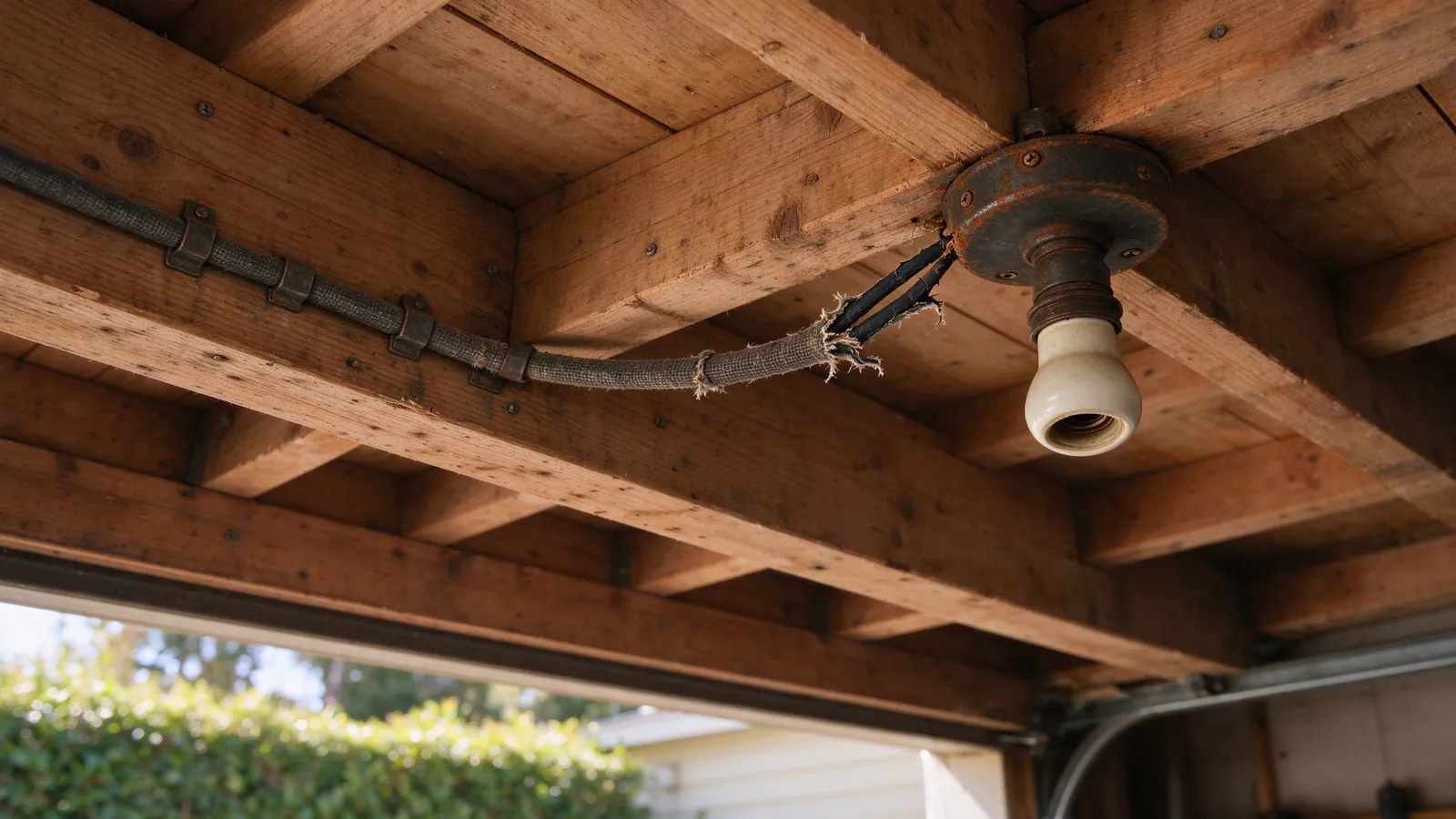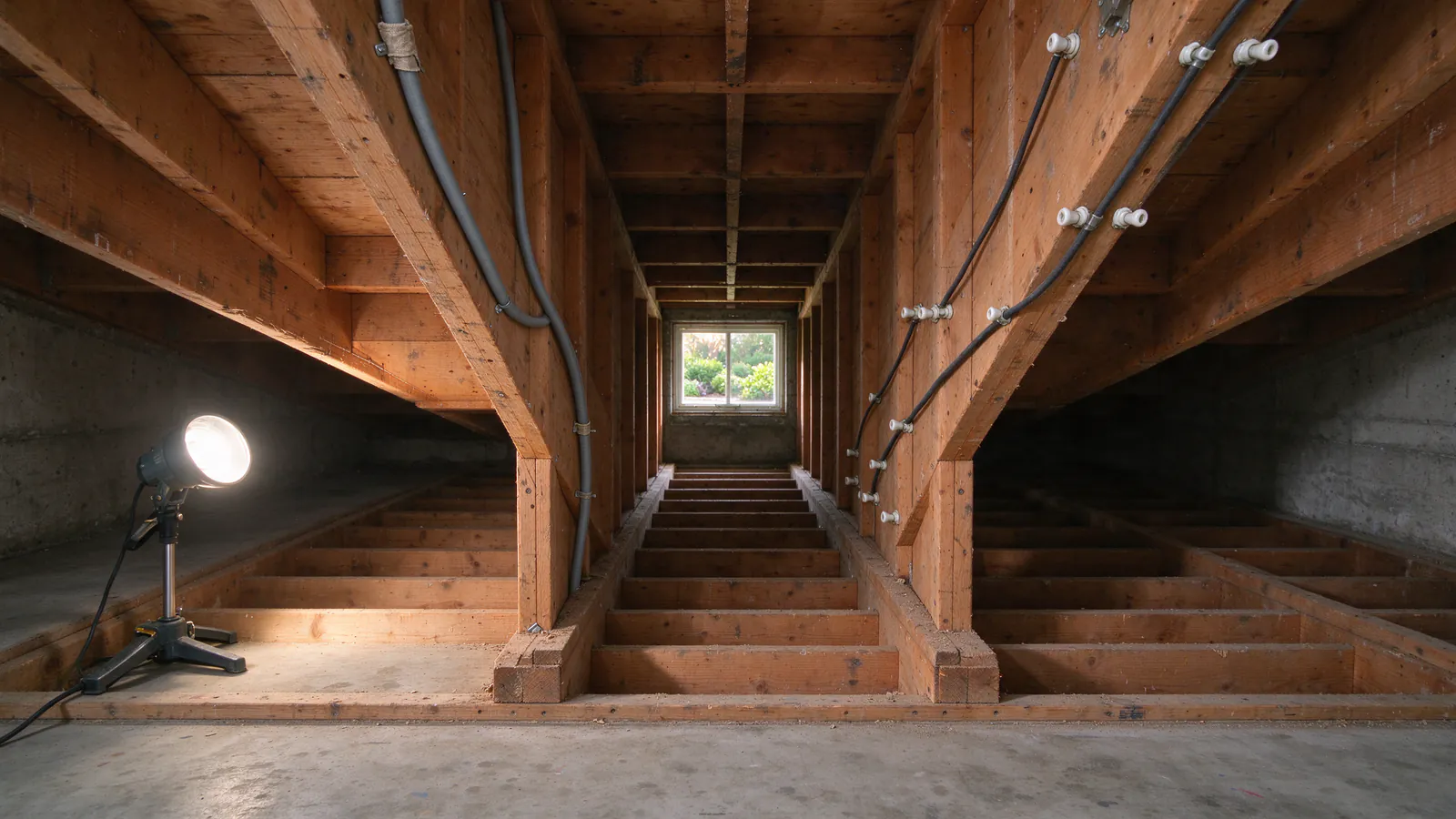
Knob and tube runs a hot and a neutral as two separate wires, held apart on porcelain knobs and passed through porcelain tubes. Cloth wiring usually means the cable that followed it: two or more rubber-insulated conductors wrapped together in one woven cloth jacket and fastened along the framing, often with no ground wire. Knob and tube conductors are cloth-covered too, so the covering alone does not tell you which system you have.
Fog City SF Knob and Tube manages knob and tube and cloth wiring replacement in San Francisco and the East Bay, with the electrical work carried out by licensed and insured California C-10 electrical contractors. Many San Francisco houses have both systems, and some have them on the same circuit, so this guide explains how each is built, how to tell them apart without touching anything, and how the difference changes the work.
The same insulation, two different systems
The insulation is the shared part. Each conductor in both systems is copper wrapped in rubber, with a woven cloth braid over the rubber. The rubber does the insulating; the braid protects it. Over decades the rubber hardens and cracks, faster where it has run warm, been bent or been handled, and the braid frays and can hide what has happened underneath. The knob and tube wiring guide covers how that aging works in the original system.
What differs is how the conductors travel. In knob and tube, each wire runs on its own supports, several inches from its partner, in open air. In cloth-jacketed cable, the hot and neutral, sometimes with a third conductor, lie side by side inside a single outer cloth jacket, and the cable is fastened along joists and studs or run through drilled holes much like modern cable. That one design change has consequences:
- Separation. Knob and tube needs both conductors to fail at the same point to short. In a cable, the conductors are already touching through their insulation, so cracked rubber inside the jacket can let them meet.
- Heat. Spaced wires in open air shed heat on their own. Bundled conductors share their heat inside the jacket.
- Boxes. Cable-era wiring more often ends in metal boxes, while knob and tube splices often sit in the open framing.
- Circuits. A later house may have been wired with more circuits than an early knob and tube house, though still far fewer than a modern kitchen needs.
How to tell them apart without touching anything
Look where the framing is open: the attic, an unfinished basement or a garage ceiling. A flashlight is enough, and nothing needs to be handled.
| What you see | Knob and tube | Cloth-jacketed cable |
|---|---|---|
| Number of wires in a run | Single wires, usually in pairs several inches apart | One cable, flat or round, with the conductors inside |
| Supports | White or brown porcelain knobs nailed to framing | Staples or straps along the framing |
| Through joists and studs | Porcelain tubes in drilled holes | Bare drilled holes or notches |
| Where it reaches a device | Flexible woven loom over each wire | Cable entering a box |
| Splices | Often in the open framing, soldered and wrapped | More often inside boxes |
Inside the rooms, the clues are weaker. Two-prong outlets, ceiling fixtures without boxes and fuse boxes point to older wiring of either type, and a three-prong outlet proves nothing. The identification guide goes further, and if anything looks damaged, scorched or crumbling, leave it alone and have it checked.
Why San Francisco has so much of both
The answer is in when the city was built. SF Planning’s Sunset District context statement dates most Sunset construction to 1925 through 1950 and notes that by the late 1930s large merchant builders were organizing specialized crews, including for sheetrock. The same study says vast areas of the Sunset and Richmond districts and the Excelsior were built out from the 1920s through the 1940s with tract housing, mostly single-family houses with integral garages. That span straddles the end of the knob and tube era, so a Sunset or Parkside house may have original knob and tube, cloth-jacketed cable, or knob and tube upstairs with later cable added below.
Older flats in the Mission and the Haight, built mostly from 1906 to 1930, are more likely to start with knob and tube and to have cloth cable or later wiring added during remodels. Either way, permit records rarely make the distinction: of DBI’s legacy electrical permits filed from January 2016 to October 2026, only three use wording such as “cloth wire” or “cloth covered.” Cloth wiring is usually replaced under the same permit as knob and tube, described simply as a rewire.
Early armored cable
Some San Francisco houses of the same period have early armored cable, often called BX: insulated conductors inside a flexible spiral metal jacket. It looks very different from both of the above and is more resistant to physical damage. The question owners ask is whether it is grounded.
The honest answer is that it depends. Whether the armor gives a continuous fault path back to the panel turns on the type of cable, how it was terminated at each box, and the condition of the jacket and fittings after decades. Many old runs have no separate grounding conductor inside. A three-prong outlet on old armored cable may or may not be grounded, and the only way to know is to test it with a meter; a plug-in tester can be misleading. The three-prong outlet guide covers what to do when the answer is no.
Is cloth wiring dangerous?
Cloth cable carries the same aging insulation as knob and tube and adds one weakness, that its conductors are bundled. It can also have strengths: more of its connections may sit in boxes, and its circuits may have been laid out for heavier use. Whether a particular house’s cloth wiring is a problem depends on the same factors that decide it for knob and tube: insulation condition, splices, whether fuses or breakers match the wire, whether it has been buried in insulation, and how hard the circuits are worked. The danger guide explains those mechanisms.
One rule differs. California Electrical Code Article 394, including its restriction on insulation that envelops concealed conductors, is written for knob and tube. Cloth-jacketed cable is judged on its condition under the general code rather than under that article. Insurers do not always make the distinction: the San Francisco Chronicle has reported carriers tightening rules on homes with outdated electrical wiring in general, and an underwriter’s photo of a fuse box and cloth cable may raise the same questions as knob and tube.
Not sure which wiring your house has?
Testing at the walk-through records the system each circuit runs on, from knob and tube to cloth, armored or modern cable.
What it means for scope
Because both systems are usually present in the same house, scope is decided circuit by circuit, not by wiring type:
- Mostly knob and tube, some cloth cable. Usually a whole-house rewire that replaces both, since the joints between them are part of the problem.
- Mostly cloth cable in fair condition. Targeted replacement of damaged runs and ungrounded circuits that need grounded outlets, through cloth wiring replacement.
- A few circuits of either left after a remodel. A partial replacement of what remains, with a record of anything kept.
- Old cable spliced onto knob and tube. Treat the circuit as knob and tube; the mixed wiring guide covers why.
For what came after both systems, and why modern cable carries a ground, see what replaced knob and tube wiring. Not sure which one you have? Call (628) 296-7628 or request an estimate.