The signs that matter most are heat and smell: a warm outlet, switch or cover plate, a burning odor, or lights that flicker with warmth or buzzing. Behind those come signs that the wiring is simply out of date, such as two-prong outlets, a fuse box, too few outlets and fuses that blow often. And then there are events, like an insurer’s question or a planned remodel, that make the decision urgent even when nothing feels wrong.
Fog City SF Knob and Tube manages whole-house rewiring and knob and tube replacement across San Francisco and the East Bay, with licensed and insured California C-10 electrical contractors doing the electrical work. This guide sorts the signs into what to act on now, what calls for an assessment, and what does not prove anything on its own.
Signs to act on now
These can mean a connection or conductor is overheating. Stop using the affected circuit and have it checked before relying on it again.
- An outlet, switch, cover plate or plug that is warm, discolored or scorched
- A burning or hot-plastic smell near outlets, fixtures or the panel
- Lights that dim or flicker together with heat, buzzing or crackling
- A tingle or shock from a switch, appliance or fixture
- Fuses that blow or breakers that trip repeatedly on the same circuit, or evidence someone has installed larger fuses
- Wiring in the attic that is buried in insulation, chewed by rodents or has crumbling insulation
None of these tells you the whole house needs rewiring. They tell you one circuit needs attention now, and that the rest deserves a look.
Signs the wiring is outdated
These are not emergencies, but each suggests the house still has original or early wiring somewhere.
- Two-prong outlets. Original knob and tube and early cable have no ground, so their outlets are two-prong. A three-prong outlet on the same wiring is no better grounded; the three-prong outlet guide explains why.
- A fuse box. Screw-in fuses usually mean the panel is original, and the branch circuits behind it often are too.
- Too few outlets. Rooms with one or two outlets, and extension cords along the baseboards, point to a circuit layout planned for lamps.
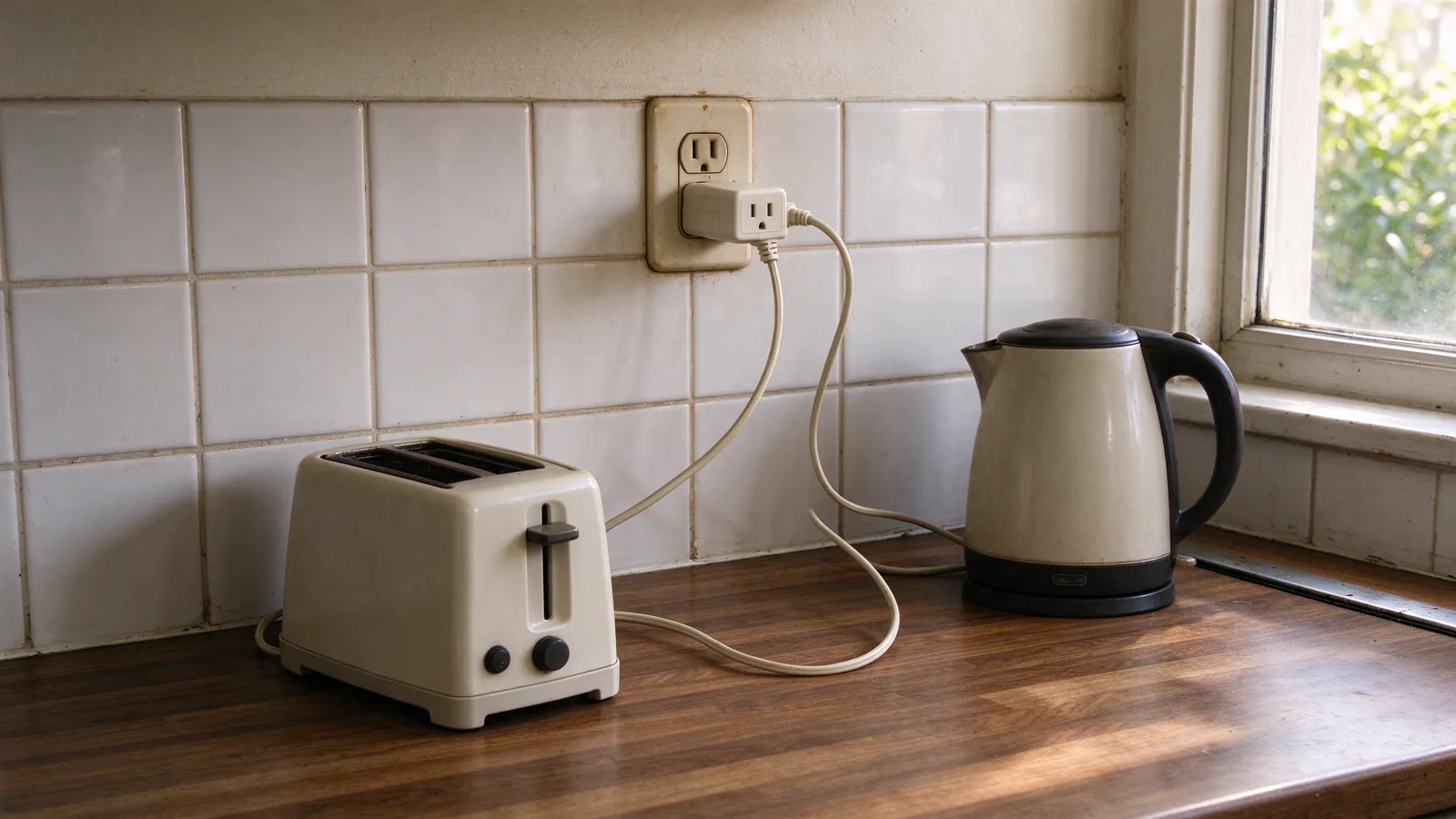
- Trips when two things run. A heater and a hair dryer, or a microwave and a kettle, that cannot run together suggest several rooms share one original circuit. The amp rating guide explains what those circuits can carry.
- Visible old wiring. Single wires on porcelain knobs in the attic or basement, or cloth-covered cable at a box, are the clearest sign. The identification guide shows what to look for without touching anything.
Events that make the question urgent
In San Francisco, rewiring is often prompted less by a symptom than by something else in the owner’s life.
Insurance. A Bay Area broker told ABC7 News that if knob and tube goes on an application, “we are going to get declined.” Thirty San Francisco electrical permits naming knob and tube, filed since 2016, cite an insurer in their descriptions. No carrier’s rule is public, and homeowners report outcomes ranging from no trouble to conditions requiring replacement within a short period. The California insurance guide covers the options.
A sale. On or after January 1, 2026, California Civil Code 1102.6i requires sellers or their agents to give buyers a statement that it may be advisable to have a qualified professional inspect the electrical system. It does not require replacement, but it makes the inspection more likely.
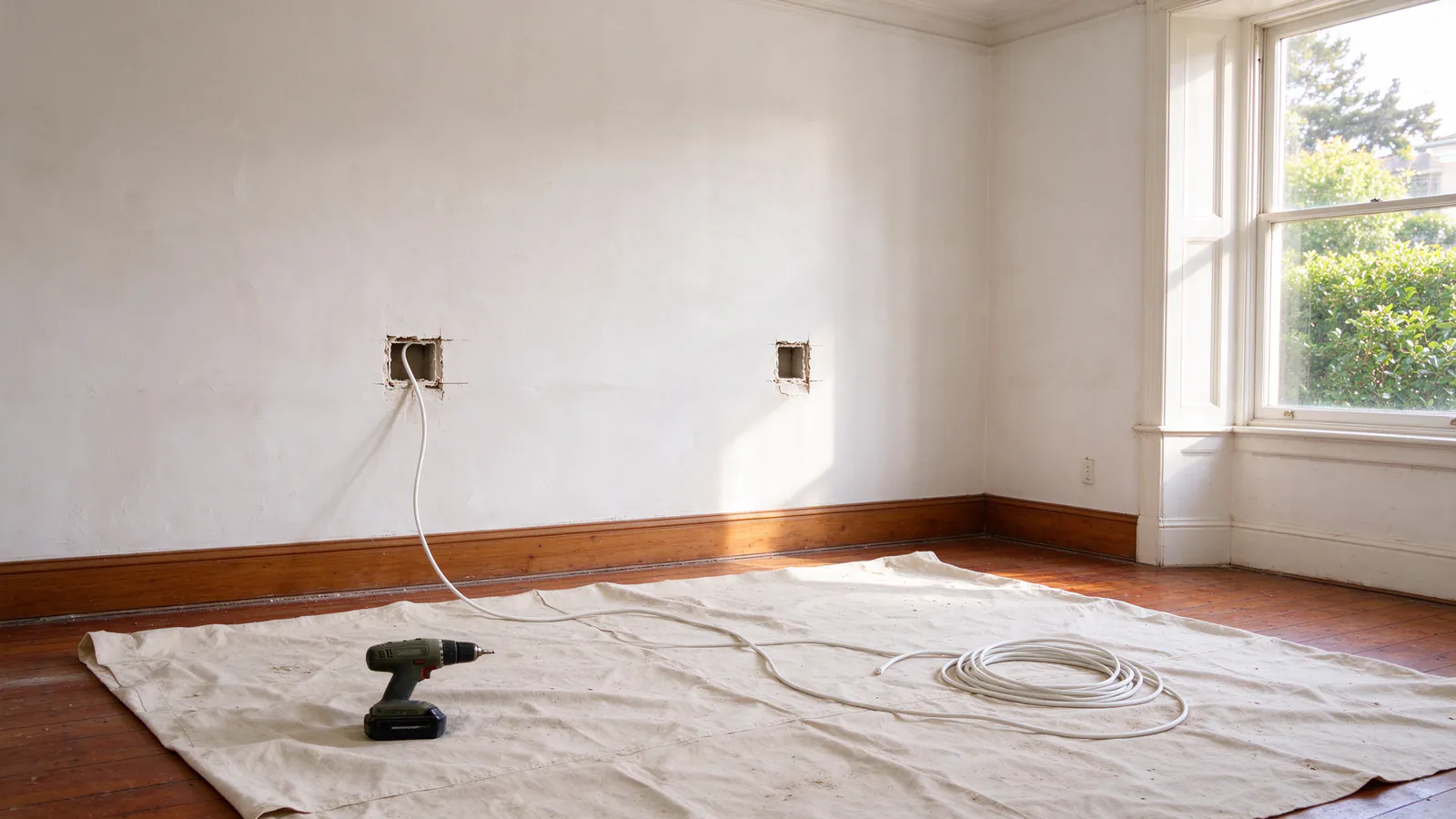
A remodel. Opening walls is the cheapest time to replace old circuits, and a kitchen or bath remodel often connects new work to old runs. Remodel knob and tube replacement covers coordinating the two.
Insulation. The California Electrical Code bars insulation that envelops concealed knob and tube, except under a licensed electrical contractor’s certification. An attic insulation project, including one paired with BayREN’s EASE Home program, often forces the question.
Electrification. An induction range, heat pump, heat pump dryer or car charger needs circuits an original layout cannot provide, and often a load calculation for the panel.
Why trouble can start in a house that has been fine
Owners reasonably ask why there would be a problem now if there has not been one yet. Old wiring rarely wears out evenly. It fails where something changed: a splice made during a remodel that loosened over time, insulation blown into an attic over conductors designed to cool in open air, a fuse upsized decades ago so the protection no longer matches the wire, or a heater plugged into a circuit planned for lamps. Each of those can sit quietly until the conditions shift, and most are hidden. San Francisco Fire Department investigators told ABC7 News the department “has not seen trends in knob and tube electrical wiring residential structure fires,” which is a fair counterweight to alarm. The point is not that every old house is dangerous; it is that the hazards are specific, and you find them by testing.
What age tells you, and what it does not
About 45% of San Francisco’s housing units were built in 1939 or earlier, against 8.9% statewide, so knob and tube is common here. But age is context, not a diagnosis. A 1915 flat may have been fully rewired in a later remodel, while a late-1930s Sunset house may have original wiring, cloth-covered cable or a mix. The only way to know what a specific house has is to test it.
Seeing one of these signs?
A symptom points to a circuit. Testing every circuit at the walk-through shows whether original wiring sits behind it.
From sign to scope
| What you notice | What it can mean | Usual next step |
|---|---|---|
| A warm or scorched outlet, switch or plate | A loose or overheating connection | Stop using the circuit; have it checked now |
| Repeated fuse blowing on one circuit | Overload, a fault, or a fuse already oversized | Test the circuit; do not upsize the fuse |
| Two-prong outlets throughout | Original or early ungrounded wiring | Assessment; plan grounded circuits |
| Knob and tube visible in attic or basement | Original wiring present; may be live or abandoned | Knob and tube inspection to map what is live |
| New panel but old outlets | Old branch circuits on a new panel | Test circuits; see the panel upgrade vs rewiring guide |
| Insurer or buyer asking about wiring | Underwriting or disclosure pressure | Written circuit record; inspection for insurance |
Testing then points to one of three scopes. If a few circuits remain on old wiring after earlier work, a partial replacement replaces those. If most circuits are original or eras are mixed, a whole-house rewire replaces them all and adds circuits. If the branch wiring is already modern and only capacity is short, the job may be the panel alone. The what replaced knob and tube guide explains what new circuits are built with, and the timeline guide covers how long each kind of job takes.
Deciding whether it is time
You do not need to know what wiring you have to start. Note what you have seen, where and when, and what prompted the question, whether that is a smell, an insurance letter or a remodel plan. The risk assessment tool helps you sort it, and the cost estimator gives a first budget number. To talk through your house, call (628) 296-7628 or request an estimate.