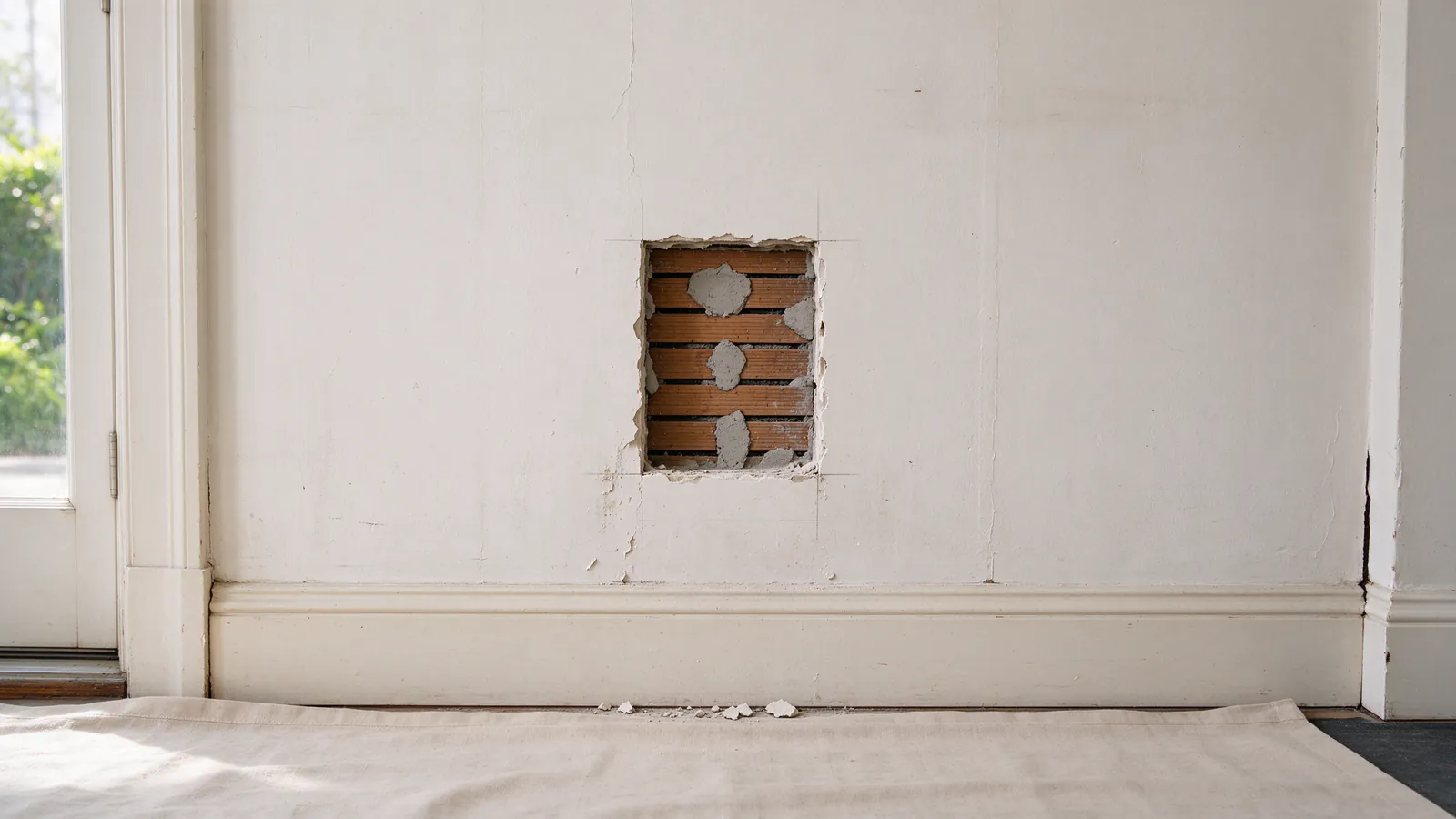
Usually, yes, in a single-family house. Circuits are replaced one area at a time, so the rest of the house keeps power while each section is worked. What changes is daily routine: rooms closed off under plastic, some hours without power in parts of the house, and a few days that need planning around the kitchen, a bathroom or a home office.
Fog City SF Knob and Tube manages knob and tube replacement in San Francisco and the East Bay, with the electrical work carried out by licensed and insured electrical contractors, and this guide explains what living through it is actually like. Where a building has more than one household, or tenants, the rules are different, and that is covered below.
How an occupied rewire is sequenced
The reason living at home works is the order of operations. New circuits are run alongside the old ones, so a bedroom’s knob and tube circuit can keep powering the room while its replacement is routed, boxed and readied. The switch from old to new happens when the new circuit is ready to connect, which is a short window for that circuit rather than days without light.
A typical sequence moves through the house by area. Work that reaches the house from below, through the basement or garage ceiling, is often done first, because it disturbs the living space least. Rooms that need wall or ceiling openings come next, one or two at a time. Panel work, if the project includes an electrical panel upgrade, needs the main power off for a period, and that day is scheduled in advance. The replacement process guide explains each step.
Two things can stretch the disruption. DBI’s pre-cover inspection has to happen before openings are closed, so a room may sit with open patches until the inspector has been. And on houses with little attic or basement access, more of the routing happens through the rooms themselves. The how long it takes guide covers what moves the overall timeline.
What a working day at home looks like
Expect the rooms being worked to be off limits for the day, with furniture moved to the center or out, floors covered, and a plastic barrier across the doorway. Openings are small, usually at outlet and switch locations and at the tops or bottoms of wall cavities, and they are cleaned up as the work moves on. In a plaster house, the openings stay open until inspection, then get patched; the plaster-wall rewiring service describes how they are cut and closed, and Fog City SF Knob and Tube includes plaster patching as its own itemized line in the quote.
Noise comes from drilling and cutting rather than demolition. It is intermittent and concentrated in the room being worked. Most households find they can work from home in a different part of the house, as long as the router, laptop chargers and any monitors are on a circuit that is not scheduled for the day.
Things to plan for
- Refrigerator and freezer. Ask which day the kitchen circuits change over and keep the door shut during the window.
- Internet and home office. Know which circuit the modem and router are on; a power strip on an extension cord to a live room usually bridges a short window.
- Medical devices. Anything that must stay powered needs a named circuit that stays live, or a plan to be elsewhere during panel work.
- Heat. San Francisco’s winters are mild, with a January mean low of 46.6°F downtown in NOAA’s 1991 to 2020 normals, but a gas furnace still needs power for its blower and controls. A day of panel work in winter means a cool house for some hours.
- Pets and children. Keep them out of rooms with open walls, tools and dust barriers.
- Keys and access. Agree on start times, where the electricians can stage tools and which doors stay locked.
Planning a rewire you will live through?
The written scope shows each room, each opening and when circuits change over, so the schedule can be planned around the household.
Dust, lead and older paint
The dust that matters most in an older San Francisco house is not plaster itself but the paint on it. DBI presumes that buildings built before 1979 contain lead paint unless a certified inspector shows otherwise. Its lead-safe guidance calls for containing dust with plastic sheeting and barriers, restricting access to the work area and cleaning thoroughly, and it rules out uncontained dry sanding, uncontained dry scraping and open-flame paint removal. The same guide calls for notifying neighbors at least three business days before work and posting a 32 by 24 inch “Lead Work in Progress” sign. The federal EPA rule requires firms paid to disturb paint in pre-1978 homes to be certified and to use lead-safe work practices, and it covers electricians.
For a household living at home, that translates into practical habits: stay out of rooms under containment, leave barriers in place overnight, and do not vacuum the work area with an ordinary household vacuum. The lead and asbestos guide explains what lead-safe practice adds to the work, and why older materials are tested before anyone cuts into them.
When moving out makes sense
Staying is common, not required. A household is more likely to be better off elsewhere for some or all of the work when:
- Many ceilings have to be opened, for example in a top-floor flat with no attic access over it, which is common in San Francisco buildings with flat tar-and-gravel roofs.
- The rewire is part of a larger remodel; the remodel service plans the electrical work around that.
- Someone at home depends on powered medical equipment and the project includes panel or service work.
- There are infants or small children and lead-safe containment will be in place in several rooms at once.
- The household works from home in ways that cannot tolerate scheduled power windows.
Even then, moving out is usually for part of the job rather than all of it, timed to the rooms or days that are hardest to live around.
Flats, condos and tenants
In a building with more than one household, the work affects people who did not choose it. When knob and tube circuits run between units, which happens in flats where one unit’s ceiling wiring sits in the floor of the unit above, work in one unit can mean access to another. Fog City SF Knob and Tube schedules power-off windows in multi-unit buildings and announces them to residents in advance. The condo and TIC rewiring guide covers coordination between owners, and the apartment building rewiring service covers whole buildings.
Tenants are a legal question as well as a scheduling one. In San Francisco, a temporary eviction for capital improvement work under Rent Ordinance section 37.9(a)(11) must be filed with the Rent Board within ten days of service, the landlord pays relocation expenses, displacement under 20 days is governed by California Civil Code 1947.9, and work expected to take more than three months requires a Petition for Extension of Time first. In Oakland, owners must pay relocation benefits when code-compliance repairs cannot be done with the unit occupied. Alameda’s Rent Program generally does not allow temporary relocation for routine electrical repairs and requires at least 60 days’ notice where relocation is approved. The rental property rewiring guide goes through the landlord side.
Questions to settle before work starts
Living at home goes best when a few things are written down before the first day: which rooms are worked in which order, which days the main power is off and for how long, where materials are staged, how dust barriers and cleanup are handled, and who closes each opening and when. Those are scope items, and the rewiring quote checklist lists them alongside the electrical lines.
To plan around your own household, call (628) 296-7628 or request an estimate and mention who will be living at home during the work.