Rewiring a condo or TIC unit in San Francisco works like rewiring a house, with three differences: DBI requires a separate electrical permit for each unit and each common area, the old circuits often cross from one unit into another, and the other owners or the association usually have to agree before anyone opens a wall. The electrical work is the same; the coordination is not.
Fog City SF Knob and Tube manages knob and tube replacement in condos, TIC buildings and flats across San Francisco and the East Bay, with the electrical work carried out by licensed and insured C-10 electrical contractors. This guide covers what changes when a building has more than one owner. For a building with one owner and several rental units, the apartment building rewiring service and the rental property guide are the better starting points.
Why one unit’s wiring is rarely one unit’s business
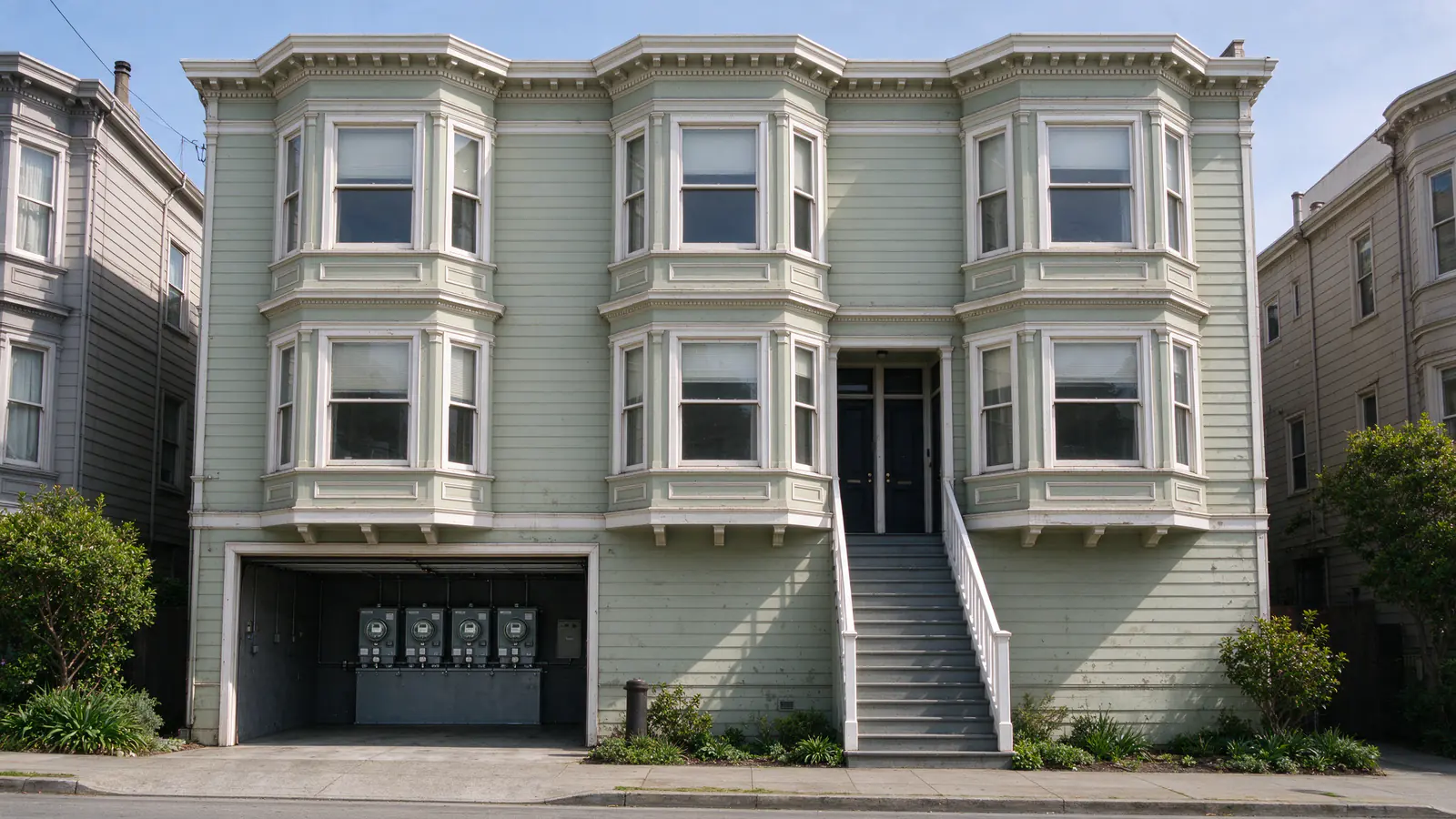
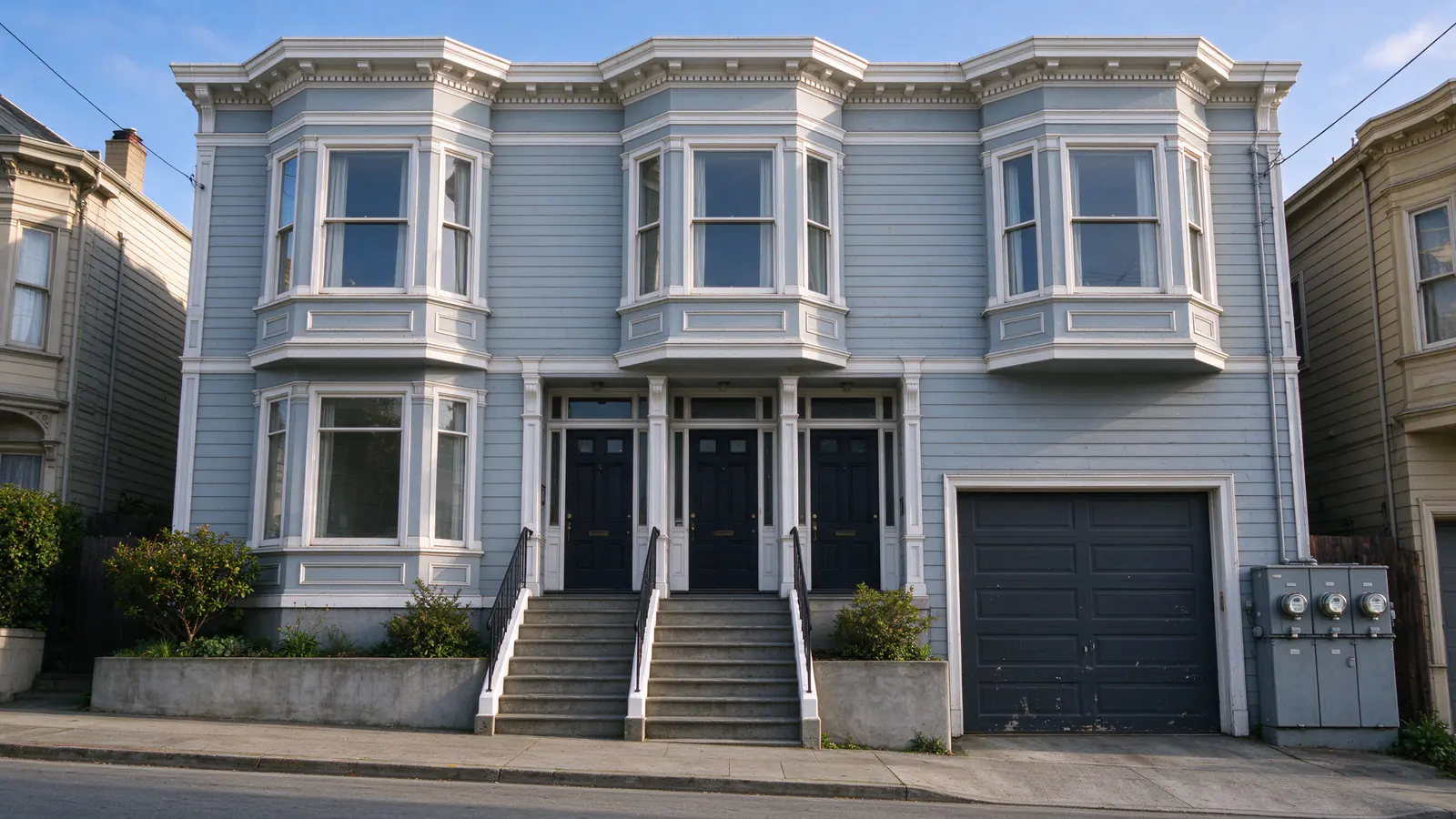
Many San Francisco condos and TICs in older buildings started as flats. SF Planning’s Inner Mission North context statement describes the rebuild after 1906 as producing two- and three-flat buildings and Romeo flats of usually four or six units, and the Eureka Valley context statement traces the two-flat form across nearly eighty years of construction. The Census Bureau counts 16,403 owner-occupied units in San Francisco buildings of two to four units that were built before 1940. Those buildings were wired as buildings, not as separate apartments.
That history shows up in the wiring. Knob and tube was run wherever the framing allowed, so a lower flat’s ceiling lights can be fed through the floor framing of the flat above, and an upper flat’s circuits may drop through a shared wall or come up from the garage. In a Mission District flat building, where post-1906 construction favored flat roofs, the top unit may have no attic, so its ceiling circuits have to be reached from the walls or from below. A rewire of one unit can therefore mean openings, or at least access, in another.
There is also shared equipment. Where each unit has its own meter and panel, common lighting, laundry and the building’s service often sit on a separate house meter. Of 2,023 San Francisco electrical permits since 2016 that name knob and tube, 196 identify a specific unit or apartment, and some describe building-level work such as changing a bank of meter panels. Anything on the service side affects every owner.
Permits and who may do the work
DBI’s fee schedule requires separate permits for each structure, each condominium unit, each existing dwelling unit except in R-3 occupancies, and each common area. Each permit is priced by its own outlets and devices: current DBI fees run from $305 for up to 10 outlets and devices to $740 for more than 40, which is where a fully rewired unit usually lands, and each permit carries its own pre-cover and final inspections. The San Francisco electrical permit guide explains the steps.
Who may apply matters more here than in a house. San Francisco’s homeowner electrical permit is only for owners of stand-alone single-family dwellings that are their primary residence, and LLCs are not eligible. A condo owner, a TIC co-owner or an owner of one flat in a building cannot use it, so the work goes through a contractor holding a license DBI accepts, with C-10 covering any electrical work. The will electricians work on knob and tube guide explains how to check a license.
Approvals inside the building
Before the permit, there is usually a building-level decision. What it looks like depends on the form of ownership and on the documents, which vary from building to building.
Condominiums. The CC&Rs and the association’s rules normally define where a unit ends and the common area begins, which alterations need board approval, and what the association requires of contractors, such as proof of insurance, working hours and protection of shared spaces. Wiring inside a unit’s interior walls may be the owner’s responsibility while risers, feeders, the meter bank and the house panel are common; your documents say which applies.
Tenancies in common. In a TIC, the co-owners share title to the whole building, and the TIC agreement normally sets out who may alter what, how shared costs are split and how access between units is handled. Because no part of the building is owned separately in the way a condo unit is, work that crosses into another owner’s space is something to agree in writing first.
In both cases, it helps to bring the other owners a document rather than a request. A written scope that lists each circuit, each opening by unit and who closes it turns an abstract approval into a specific one. In the written scope and price from Fog City SF Knob and Tube, every opening is listed with who closes it, and plaster patching is its own itemized line.
Rewiring one unit in a shared building?
A walk-through traces which circuits cross into other units, so the scope you bring to the other owners lists the real openings.
Splitting the cost
There is no single rule for who pays. The governing documents decide, and owners also negotiate, especially when one owner’s insurance renewal is what started the project. A few patterns make the split easier to agree:
- Separate the unit work from the shared work. Each unit’s circuits, devices and openings on one line; common lighting, laundry and service equipment on another. Per-unit permits already follow that division.
- Price shared access explicitly. If a lower unit’s ceiling circuits are reached from the upper unit’s floor, the openings and patching in the upper unit belong to the lower unit’s scope, and the quote should say so.
- Decide on phasing together. Rewiring every unit at once usually costs less overall than separate jobs, because access, setup, protection and building-level work happen once. Rewiring one unit now and others later is possible, as long as the written circuit record shows exactly what remains in the rest of the building.
Typical ranges and what moves them are in the cost guide, and the rewiring quote checklist lists the lines that make two quotes comparable.
Panels, service and the utility
A unit rewire can usually stay on the unit’s own panel if it has capacity, but adding circuits for an induction range, heat pump or car charger can push a unit or the building past what the service carries. A building-level upgrade involves every owner and PG&E’s process for service changes; the electrical panel upgrade service and the panel upgrade vs rewiring guide explain why that is a separate decision from the branch wiring. Some utility programs exclude condos, so check eligibility for any panel offer before planning around it.
Incentives, insurance and other building rules
BayREN’s EASE Home program, which can reimburse up to $2,000 to fix active knob and tube (BayREN also announced $300 toward a certification that it is inactive; confirm that line with BayREN), applies to homes of four or fewer units built before 2010, for income-qualified PG&E customers, as part of a weatherization project. Whether a particular condo or TIC unit qualifies is a question to confirm with BayREN; the BayREN rebate guide covers the conditions.
Other rules can attach to the building rather than the unit. DBI presumes buildings built before 1979 contain lead paint, so openings follow lead-safe practice in every unit. Larger wood-frame buildings may have soft-story retrofit work planned, which is a chance to rewire while framing is open. In an Article 10 historic district, SF Planning does not require a Certificate of Appropriateness for interior alterations, though exterior changes visible from the street, such as a new service mast, are a different matter. If any units are rented, Rent Board rules govern any temporary relocation, as the living at home during rewiring guide explains.
Scheduling around several households
The practical difference owners notice most is power. Work on shared circuits or the service affects everyone, so in multi-unit buildings Fog City SF Knob and Tube schedules power-off windows and announces them to residents in advance. Access to other units is arranged with their owners or occupants ahead of time, and each unit’s rooms are protected and cleaned as the work moves.
If you are starting the conversation in your building, call (628) 296-7628 or request an estimate with the number of units, how the building is owned and which unit or units are in scope.