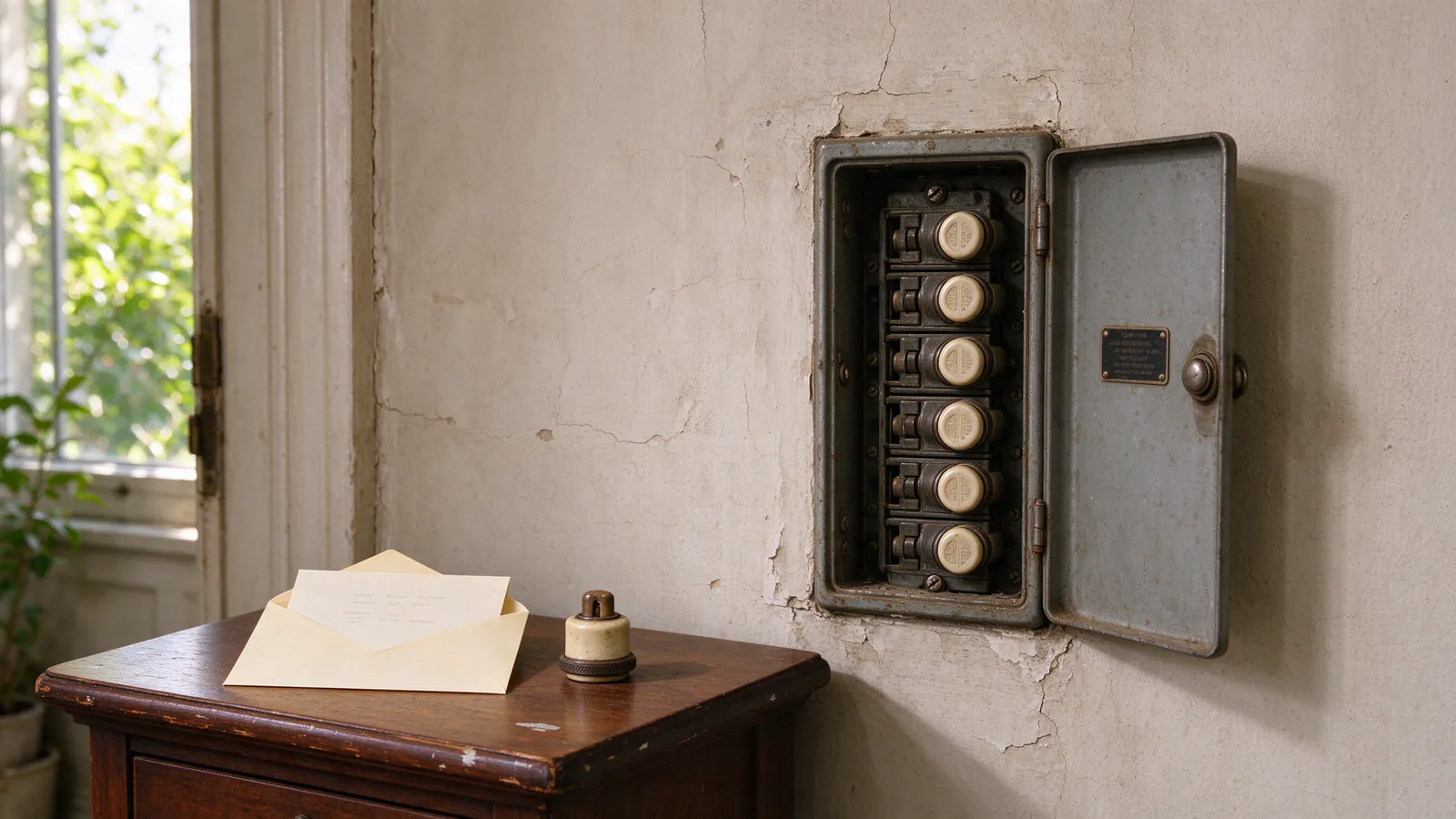
A non-renewal letter that names knob and tube wiring is how some San Francisco owners first learn the wiring has become an insurance problem. Fog City SF Knob and Tube manages knob and tube inspection and replacement in San Francisco and the East Bay, with the electrical work carried out by licensed and insured electrical contractors. This post sets out what California’s rules give you after a notice, and how to use the time.
Nothing here is insurance or legal advice, and no wiring work guarantees that a carrier will write or renew a policy. The insurer decides. What the owner controls is how much the insurer knows about the house, and how quickly.
What the notice has to tell you
The California Department of Insurance’s residential guide sets the basic rules. An insurer that will not renew a homeowners policy must send written notice at least 75 days before the policy expires, and the notice must state the reason. A cancellation in the middle of a term is narrower: once a policy has been in force for 60 days, an insurer may cancel only for reasons set by law, one of which is physical changes in the insured property that increase a hazard insured against. Both kinds of notice must give the reason.
So the first step is simply to read the letter closely. Does it name knob and tube, or “outdated electrical,” or a fuse box, or an inspection finding? Does it ask for anything, such as an electrician’s report? A reason you can answer with documents is a different situation from a carrier leaving a whole category of older homes.
Why this keeps happening in the Bay Area
The Department of Insurance’s consumer guidance does not address knob and tube specifically, so the pattern comes from individual carriers’ underwriting. ABC7 quoted a Bay Area broker in 2025: “If we put it on the application, we are going to get declined.” The City of Berkeley’s own BESO measure sheet states that “Many insurance providers will not issue or renew homeowner policies for houses with active knob and tube wiring.” San Francisco’s Fire Department, asked by the same station, said its investigators had not seen trends in knob and tube residential structure fires, a reminder that the pressure is underwriting, not a measured spike in fires.
The permit record shows insurers driving work. Thirty DBI electrical permits filed since 2016 that name knob and tube cite insurance in their description, such as “knob and tube wiring removal for insurance purposes” and “insurance company advised owner to make it redundant and disconnect.” California FAIR Plan residential policies in San Francisco ZIP codes rose from 335 in September 2021 to 1,861 in September 2025, though those figures give no reason for any policy.
The first two weeks: broker, test, records
Call a broker early, before the expiration date is close. Homeowners report that carriers vary widely: some decline any active knob and tube, some insure on condition that the house is rewired within a short period, often around 60 days, and some ask for an electrician’s written report on what is active. One San Francisco owner reports a carrier sending a third party to photograph the electrical panel during a new application. A broker who knows which carriers are writing older homes can tell you what each one will want to see.
At the same time, get the wiring tested. A test of every circuit shows whether the knob and tube is active, abandoned or mixed with later wiring, and which rooms it serves. That record answers the questions underwriters ask more precisely than “the house is old.” An electrical inspection for insurance produces the written findings, and a knob and tube inspection covers the same testing when a replacement scope is the next step. The active vs abandoned guide explains why the distinction matters to a carrier.
Choosing a scope you can finish in time
Once you know what is live, the choice is usually between replacing the active circuits and disconnecting runs that no longer serve anything. Disconnecting is faster where it applies, and San Francisco’s code requires unused conductors to be removed or identified and terminated in an approved manner, which is what knob and tube removal covers. Where the circuits are still in use, a partial replacement or a whole-house rewire replaces them.
Timing depends on the house: how many circuits, how much access from the attic, basement and garage, whether a panel upgrade is needed, and how many units are involved. The how long it takes guide covers the factors. Permits are part of the timeline too. Every rewire needs a DBI electrical permit with a pre-cover inspection before walls close, and the final inspection and Green Tag are what show an underwriter the work is complete. If PG&E has to change the service, its process runs on its own schedule.
If the policy ends before the work does
If a new carrier cannot be found in time, the California FAIR Plan exists for that situation. It describes itself as the insurer of last resort, available when no other option is reasonably available, and a broker must first make a diligent search of the traditional market. FAIR Plan policies cover basic fire; other insurers sell Difference in Conditions policies to fill the gaps. Homeowners report using that combination until the knob and tube was replaced, then returning to the traditional market. The Department of Insurance also points people struggling to find coverage to the surplus lines market and its online Home Insurance Finder. The knob and tube insurance guide covers the market in more depth.
Paying for it
For budgeting, the public figures are a typical San Francisco range of $20,000 to $50,000 or more for the electrical scope of a whole-house knob and tube replacement in a single-family home, and DBI permit fees of $305 to $1,289. Income-qualified PG&E customers in homes of four or fewer units may reach BayREN’s EASE Home rebate of up to $2,000 toward fixing active knob and tube, but only as part of a weatherization project; the BayREN rebate guide has the conditions.
The practical order after a notice holds whatever the house: read the reason, call a broker, test every circuit, choose a scope that answers the reason, and get it permitted and finaled before the policy ends. To start with the test, call (628) 296-7628.