When a San Francisco house goes on the market, the buyer’s questions about old wiring usually start with paperwork. The 3R report, the seller’s disclosures and the city’s permit history all get read for clues about knob and tube. Fog City SF Knob and Tube manages knob and tube inspection and replacement in San Francisco, with the electrical work carried out by licensed and insured electrical contractors, and this post is about what that paperwork can and cannot tell you.
The short version: records show what someone applied to do and whether it was signed off. They do not show what is in the walls today. A buyer who wants to know whether knob and tube is still live needs the records and a test of the circuits.
The 3R report and the permit record behind it
The 3R report is DBI’s Report of Residential Building Record: the authorized use and building permit history of a residential building, which San Francisco’s housing code requires owners or agents to give a buyer. DBI states that it covers building permits only and does not include plumbing, electrical or commercial permits. For wiring, then, the source is the electrical permit record itself, which DBI publishes as open data on DataSF.
That record now spans two systems. Older filings sit in DBI’s legacy Electrical Permits dataset, which holds more than 350,000 permits. Newer digital filings, rolling out since February 2026, sit in the PermitSF permitting data. Each record carries a description of the work, a filing date and a status, and the legacy records add issue dates and the block and lot. A complete search covers both systems.
What the permit descriptions actually say
Permit descriptions are written by whoever files them, and the wording varies widely. From January 2016 to October 2026, 2,023 DBI electrical permits named knob and tube in their description, while 11,580 used the word rewire in some form. A rewire that removed knob and tube may never say so in its description.
The descriptions that do name it cover very different scopes. Some describe a whole-house rewire: “rewiring knob and tube wires throughout the home. installing new sub-panel.” Others are a partial replacement: “partial re-wire remove knob and tube,” or “rewire outlets that have knob and tube, bedroom, living room, hallway and bathroom.” And 121 of the knob and tube permits describe de-energizing or abandoning wiring rather than replacing it, which can leave dead runs in the walls; the active vs abandoned guide explains the difference. A permit that names knob and tube is a starting point for questions, not proof the house is clear.
Filed is not finished
The status matters as much as the description. A permit that was filed, or issued and never inspected, is not completed work. San Francisco’s electrical code requires a pre-cover inspection before wiring is concealed and a final inspection, and power is connected under a Certificate to Connect Current, the Green Tag. A finaled permit is the record that an inspector saw the work.
Unpermitted work is the other side. DBI can order concealed, uninspected work exposed at the owner’s expense, and its penalty for work done without a permit is nine times the permit issuance fee plus the original fee. A house that was visibly rewired with no permit on file leaves a buyer with no inspection record for that work, which an electrical inspection for insurance or a scoped test can partly answer. The San Francisco electrical permit guide explains the permit steps.
The electrical advisory now in every sale
A newer piece of sale paperwork took effect statewide on January 1, 2026. Since then, Civil Code 1102.6(i) generally requires the seller or the seller’s agent to give the buyer a statement that it may be advisable to have a qualified professional inspect the electrical system, including the main panel, subpanels and wiring, and that “Substandard, recalled, or faulty wiring may cause a fire risk and may make it difficult to obtain property insurance.” Homes within three years of their certificate of occupancy are exempt. The San Francisco Association of REALTORS revised its standard seller disclosure form to deliver the statement.
The advisory does not say a house has knob and tube, and it does not require any work. It does put electrical inspection in front of every buyer in writing, and it ties wiring to insurance in the state’s own words. What a seller has to disclose, and how, is covered in the selling a house with knob and tube guide.
Energy rules at sale meet the attic
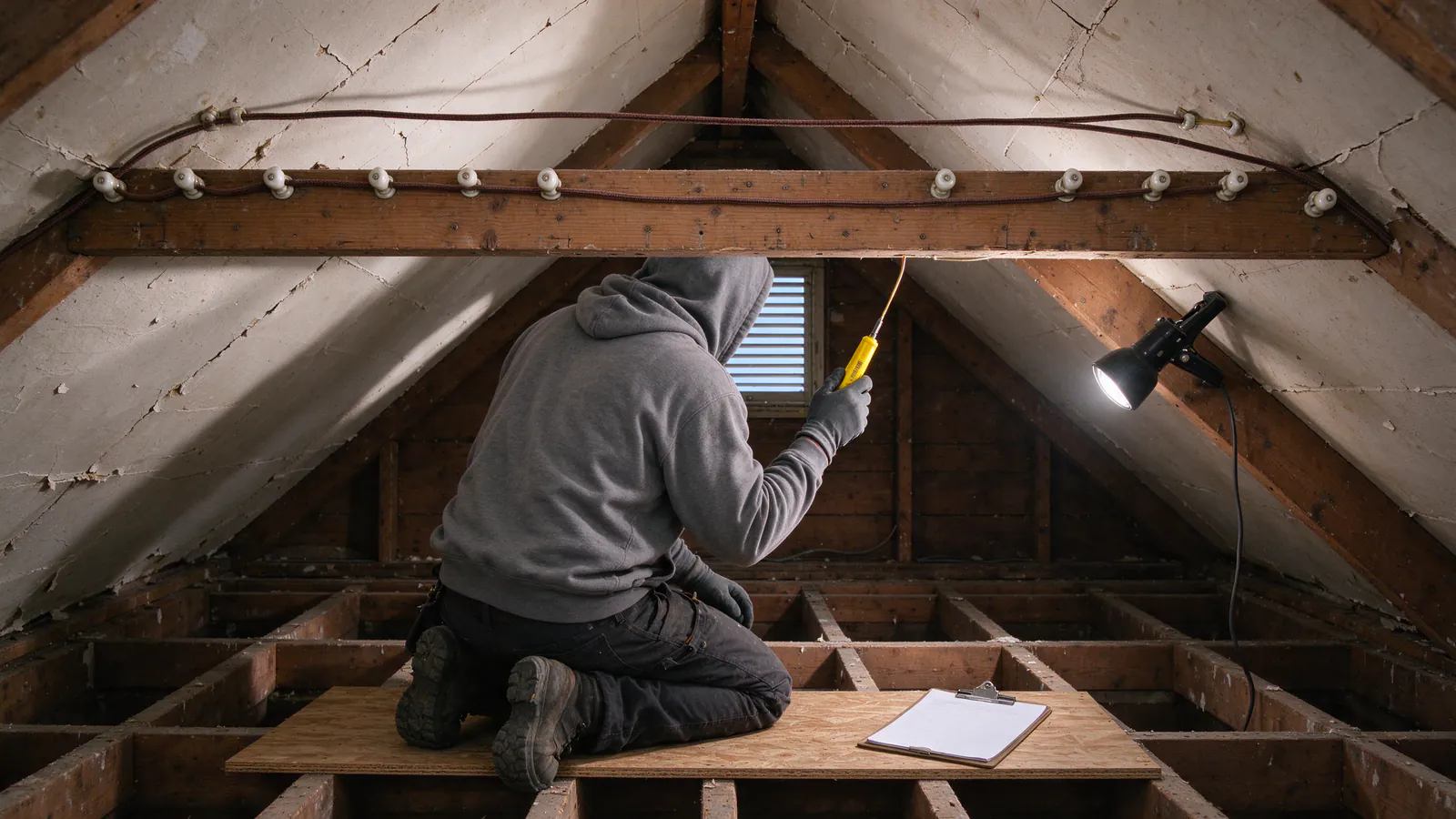
San Francisco’s Residential Energy Conservation Ordinance adds a sale-time step that can run into old wiring. Before selling, owners must obtain a valid inspection, install basic energy and water conservation measures and obtain a certificate of compliance, and the energy measures may include insulating attic space. If that attic still holds active knob and tube, the California Electrical Code does not allow insulation that envelops the conductors unless a California-licensed electrical contractor surveys and certifies the wiring, the certification is filed with the building department, and bilingual caution notices are posted. The attic insulation page explains that survey.
Why the paperwork matters more than it used to
Insurance is what changed the weight of these records, as the knob and tube insurance guide explains. A San Francisco agent told ABC7 that knob and tube “wasn’t something that was a deal breaker” but “now it’s become an insurance issue,” and that without insurance the lender will not approve the mortgage unless the buyer pays for a FAIR Plan policy. Homeowners report that some carriers will insure only on condition that the wiring is replaced within a set period after closing, and that others ask for an electrician’s written report. Homeowners also report finding knob and tube after a sale that a pre-purchase inspection or an earlier partial rewire had missed, such as ceiling fixtures still on old runs.
For a buyer, the useful sequence is to read the permit record, note what each knob and tube permit actually covered and whether it was finaled, then have every circuit tested before the contingency period ends. The buying a house with knob and tube guide covers the offer side, and a knob and tube inspection produces the written circuit record that a permit history cannot. To arrange one, call (628) 296-7628.